High Fidelity: The Story of House Yamaha

How a 19th-century Japanese handyman who fixed a broken reed organ ended up teaching the Lexus LFA to sing at 9000 rpm.
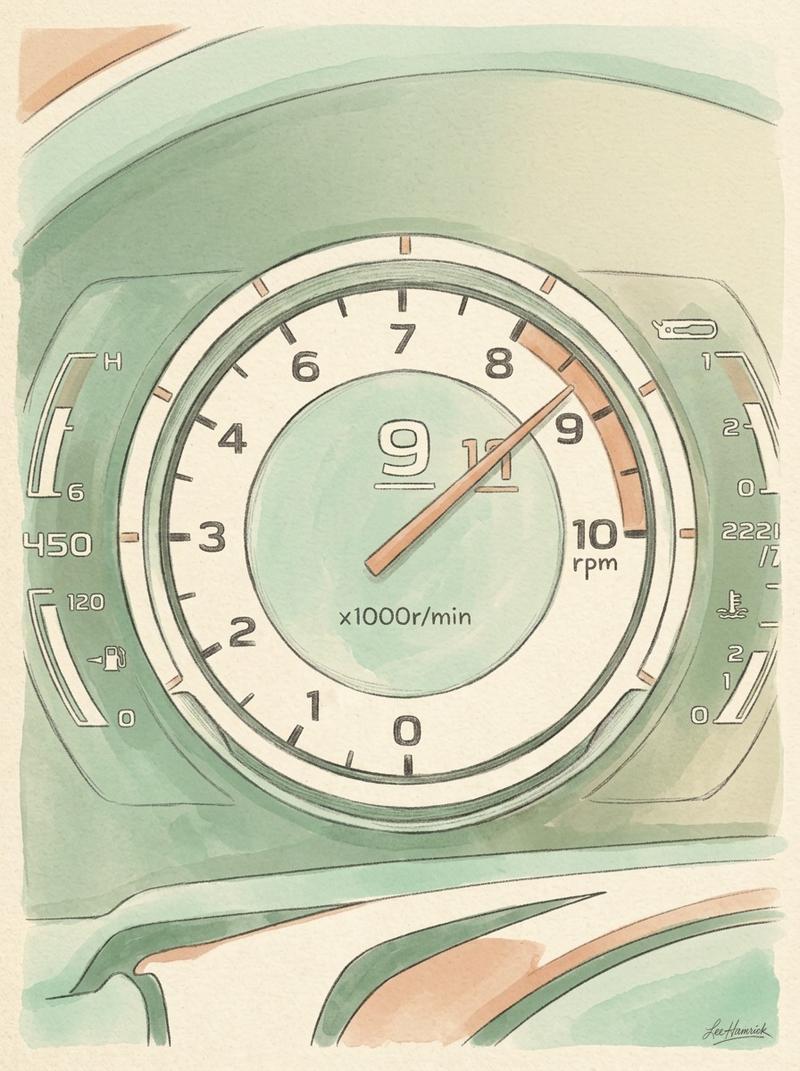
There is a sound the Lexus LFA makes at 9000 rpm that is genuinely hard to explain to someone who hasn't heard it. The 1LR-GUE V-10 doesn't just make noise. It makes a specific kind of noise, the kind that starts in your chest and ends somewhere behind your eyes. Big-displacement bass underneath, and then this golden, screaming upper register on top, the kind of sound you associate with Formula 1 cars from an era when that actually meant something. You come away from an LFA wondering how a production car arrived at a sound that refined, that intentional.
The short answer is that a musical instrument company taught it to sing. But that answer raises a better question, which is how a musical instrument company got into the business of engine tuning for one of Japan's most ambitious automotive projects in the first place. That story starts much further back than you'd expect, and it starts with a man hauling a reed organ up a mountain.
Torakusu Yamaha was born in 1851, which puts him right at the fault line of one of the most dramatic cultural shifts in modern history. His father was a samurai, though not the sword-swinging variety popular in fiction. A long peace had turned the samurai class into something closer to a noble rank, more symbolic than martial. His father's actual job was as an astronomer for the Kishu clan, and growing up around instruments of observation and measurement gave the younger Yamaha an early interest in how things worked mechanically. When Japan's last shogun resigned in 1867 and the feudal pathways evaporated, Yamaha went looking for a modern trade. He ended up apprenticing with an English watchmaker in Nagasaki.
By his mid-thirties, he had settled in Hamamatsu, a modest city that most people in the West would only recognize today as the setting for FX's Shogun series. Yamaha was doing what he had to do: repairing medical equipment, servicing watches, pulling a rickshaw when the work was slow. The kind of person who can fix almost anything usually ends up fixing everything, whether he planned to or not.
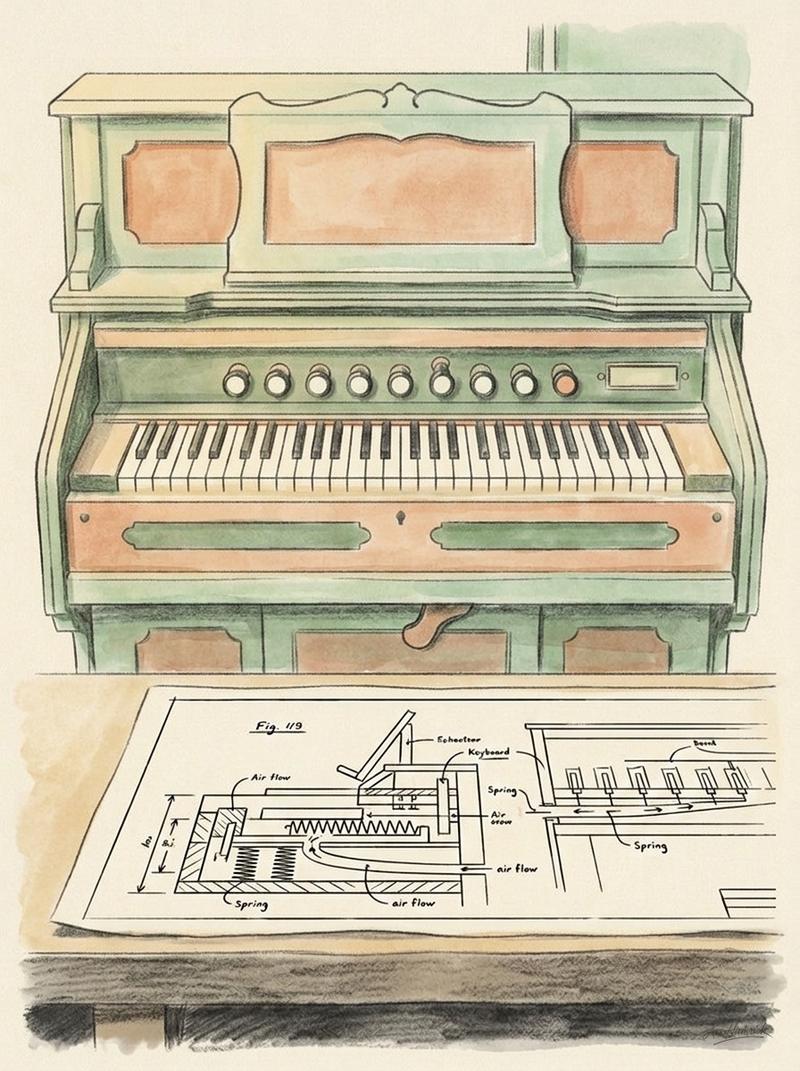
Then a reed organ at the local elementary school broke. Two springs, as it turned out. A straightforward repair, except Yamaha didn't just fix it. He sat there and sketched out the entire instrument, every mechanism, every component, with the intention of building one himself. The school principal was apparently not thrilled about the timeline. Yamaha took his time anyway.
With some backing from friends, he built the first reed organ ever made in Japan, then walked 160 miles over the Hakone mountain range to Tokyo to show it to the music department at the university there. The president of the department listened, winced, and told him the instrument was wildly out of tune. Yamaha could play the shamisen, a traditional Japanese lute, but Western musical tuning was a different language entirely, and his organ was coded wrong. The department head, to his credit, let Yamaha stay on to learn Western music theory. Yamaha, approaching forty, dressed in work clothes, sat in a classroom and started over.
That kind of resilience is worth sitting with for a moment. This was not a young man with decades of runway in front of him. This was someone who had already failed at the thing he thought he was succeeding at, publicly, after walking 160 miles to get there, and he responded by enrolling in the remedial course and getting it right. The personality that could do that is the same personality that eventually built one of the strangest, most diversified industrial companies on the planet.
What Yamaha Motor Company became is, depending on your angle of approach, either totally logical or completely absurd. You can buy a Yamaha piano. You can ride a Yamaha motorcycle with a crossplane-crankshaft four-cylinder that sounds like it belongs at a circuit. You can take a Yamaha outboard motor out on the water, or a Waverunner, or a Wolverine side-by-side into the hills. The crossed tuning forks on the motorcycle badge are a direct line back to the musical roots. A company that learned to tune instruments learned to tune engines, and it turns out those skills are not as different as they sound.
The automotive thread in the Yamaha story runs through some cars that matter to anyone who cares about driving. The Toyota MR2 and the Supra both have a Yamaha connection in the way their engines behave, that willingness to rev freely and cleanly, the sense that the powerplant wants to be worked rather than just loaded up with torque and pointed at a highway. Engines that reward the driver who uses the full rev range rather than the one who just mashes the throttle and waits. That characteristic doesn't happen by accident.
And then there's the LFA, which is the clearest expression of what Yamaha's involvement in automotive engineering actually sounds like when given full latitude. The 1LR-GUE V-10 revs to 9000 rpm and produces a sound that occupies a frequency range a conventional V-8 or inline-six simply cannot reach. Yamaha's acoustic engineers were involved in shaping that sound deliberately, treating the engine's output the way a luthier thinks about the resonance of a body cavity. The result is a car that sounds more like a finely tuned instrument than a machine.
There is also, worth noting, a Detroit chapter in this story. Yamaha had a hand in a V-6 engine for a Ford product built in the United States, which is either a footnote or a punchline depending on how seriously you take corporate engineering partnerships. It's real, and it's a reminder that Yamaha's reach into automotive work was never limited to Japan.
The thing that connects Torakusu Yamaha carrying a reed organ over a mountain pass to a V-10 screaming at 9000 rpm in a carbon-fiber supercar is the idea that precision and ear are not separate from engineering, they are the same thing at a high enough level of craft. The LFA sounds the way it does because someone cared about sound as a measurable, tunable property, not a byproduct. That attitude traces back to a handyman in Hamamatsu who decided that fixing the springs wasn't enough. He wanted to understand the whole instrument.
That's a long way to travel for a punchline about a car that vibrates your skull at full throttle. But some punchlines are worth the walk.

Written by
John Buchanan