What Junkyards Still Have if You Know Where to Look

Honda Civics and JDM-era parts still turn up in self-serve junkyards. Here's how to search smart and pull real value from the rows.
Last Saturday I walked 2.3 miles of junkyard rows and spent $47. What I pulled would have cost over $300 sourced new or through the usual online channels. The math on junkyard hunting has always worked. What surprises people is that it still works in 2025, when everybody assumes the good stuff got picked decades ago.
It didn't. Not even close.
Why Civics Keep Showing Up
Honda Civics have been one of the best-selling cars in the United States for decades. That volume means attrition. Cars get rear-ended, flood-damaged, or simply abandoned when the repair estimate exceeds the book value. The mechanical components, interior pieces, and trim survive the same collision that totaled the car. One owner's insurance write-off is another person's parts inventory, and self-serve yards charge fractions of dealer or even aftermarket pricing on that hardware.
The JDM community figured this out early. Civics from the sixth generation forward (EK, EM, EP, FD body codes) share significant parts interchangeability, and their suspension geometry, intake components, and interior hard parts are well documented. That means when you find one in the rows, you know exactly what you're looking at and exactly what fits what. If you want to see what dedicated builders are pulling for these platforms, our EK Civic build parts haul is a good reference point, and our budget turbo Civic build guide covers how far that sourcing can stretch.
How to Actually Search a Yard
Most large self-serve yards update their inventory online. Pull the site the night before, filter by make and model, and print or screenshot the row locations. Yards rotate stock constantly. A car that was not there on Tuesday may be in the back row by Friday. Checking the inventory twice a week if you have an active build is not obsessive. It is how you catch the right car before someone else does.
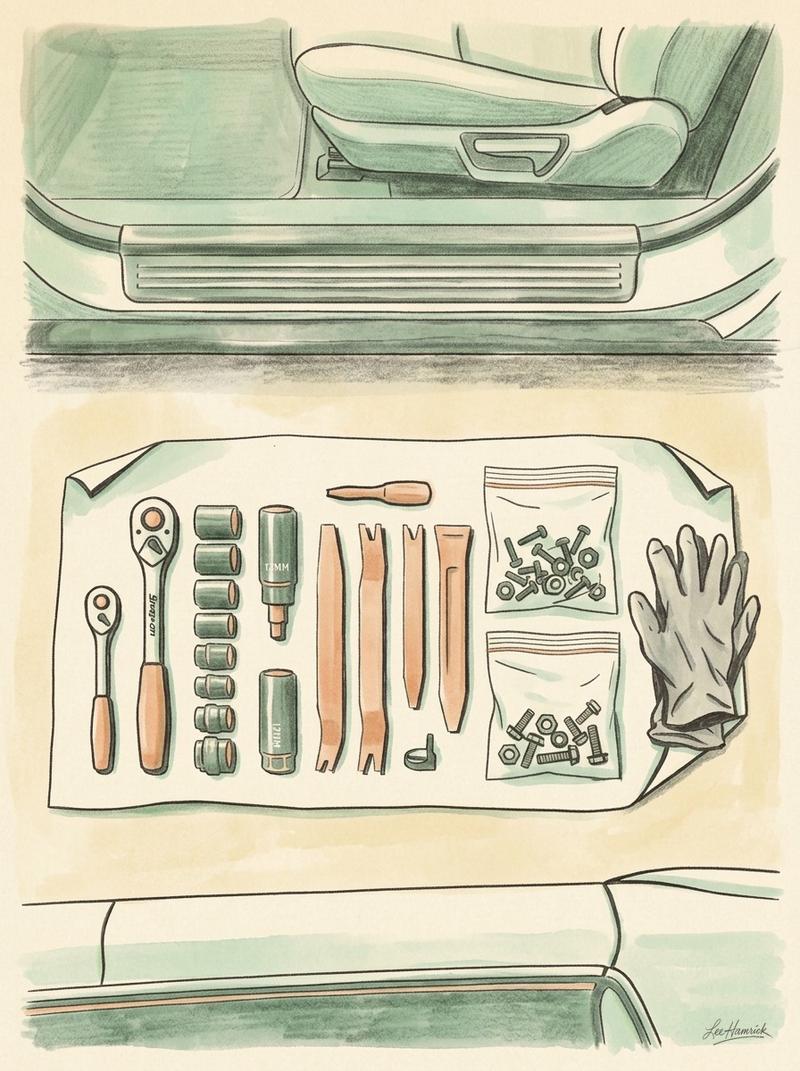
Bring your own tools. This is non-negotiable. A basic pull kit for most yard work:
- 3/8-inch drive ratchet and a short extension
- 10mm, 12mm, and 14mm sockets (metric wins in Japanese cars almost every time)
- Flathead and Phillips screwdrivers, multiple lengths
- Trim panel removal tools, plastic preferred to avoid scratching pieces you want
- A pry bar for stubborn brackets
- Zip-lock bags and a marker for fasteners
- Nitrile gloves, a rag, and a small flashlight
The people who show up empty-handed pay full price for nothing because they cannot get the part off the car. The people who show up prepared leave with bags full of hardware and a receipt that looks too good to be true.
What to Prioritize When You Find a Civic
Condition varies wildly. Walk the car before you touch anything. Check for crash damage on the side you care about. Look at the firewall. Check the floor pans from underneath if you can get low enough. A car that took a hard front hit may still have a perfect rear subframe, good interior pieces, and intact suspension components on the undamaged corner.
Interior hard parts go fast because they are the easiest pulls. Door panels, center consoles, cluster housings, and trim pieces walk out the door before the yard has the car listed for 48 hours. If the interior is intact when you find it, pull what you need immediately and come back for mechanical parts later if you have to.
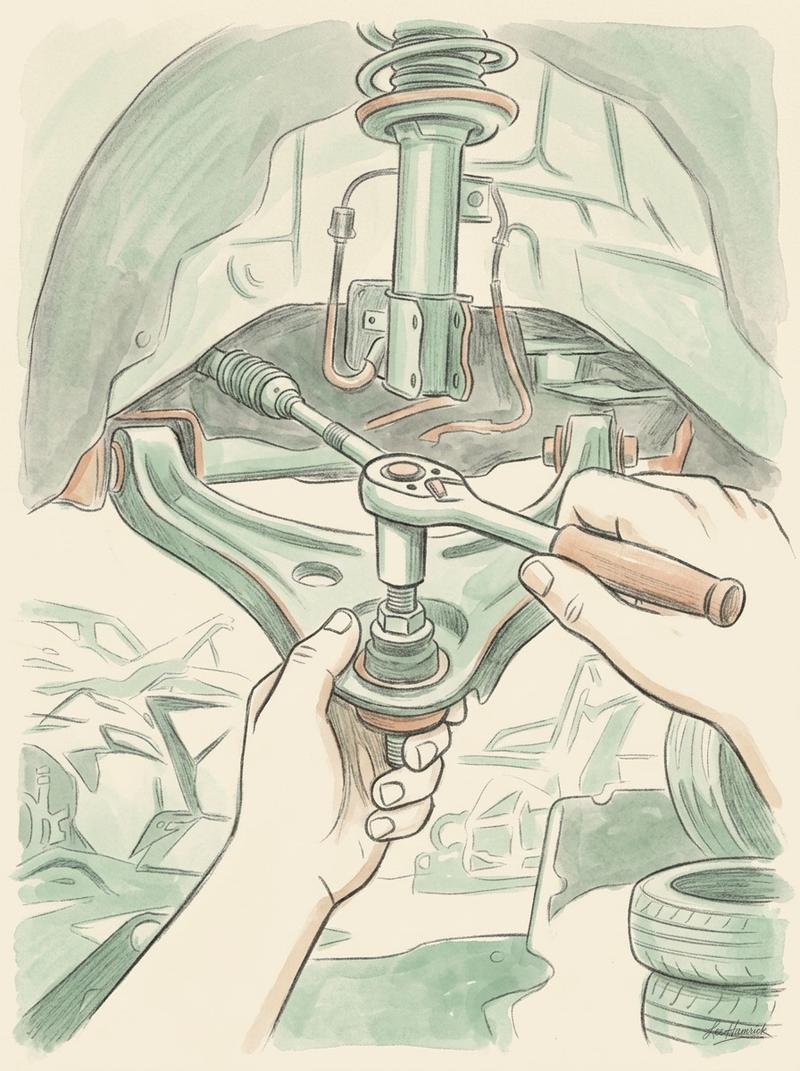
Suspension components require more time but hold more value. Control arms, end links, and brackets for Civic-platform cars cross a surprising number of applications. If you see geometry hardware in clean condition, it is worth the extra time with the socket set. Even if you do not need it for a current project, the cost is low enough that holding a spare is reasonable.
Engine Bay Pulls: Worth It or Not
Full engine pulls at a self-serve yard are time-intensive and physically demanding. The math gets complicated fast when you factor in a full afternoon of labor. But ancillary engine bay components are a different calculation. Intake manifolds, throttle bodies, sensor brackets, valve covers, and accessory hardware come off in minutes, cost next to nothing at the register, and fail regularly enough on high-mileage cars that having a clean spare is genuinely useful.
Inspect mounting surfaces for cracks. Check plastic intake components for brittleness, especially on cars that lived in hot climates. A hairline crack in a throttle body you cannot see in the yard becomes a boost or vacuum leak on your car. Take the extra thirty seconds to look carefully. The numbers do not work if you bring home a part that fails in three months. If you want a deeper look at diagnosing what you pull before it goes on your car, our electrical troubleshooting primer is worth bookmarking.
What You Will Not Find Anymore
Rare JDM-specific trim, clean seats on any car that spent time on a coast, and unmolested wire harnesses on anything with a performance history. These get pulled within days, sometimes hours, of a car hitting the lot. If those are what you need, the self-serve yard is still your first call, but the online inventory check the night before becomes critical rather than optional.
Original audio and navigation hardware is gone. Wheels are usually gone. Airbag components are regulated at most yards and not available for self-pull. Know what you are hunting before you walk in, because the disappointment list gets long if your expectations are wrong.
The Honest Case for Junkyard Sourcing
A rebuild or build project on a Civic-platform car does not require a large parts budget if you are willing to work the yards. The time cost is real. A productive Saturday afternoon in the rows is not a passive activity. But the alternative is paying retail pricing on components that are sitting in a wrecked car three miles from the highway, behind a fence, waiting for someone to come get them.
The inventory is still there. People assume the enthusiast community stripped everything worthwhile out of these yards years ago. Walk the rows and you will find out quickly that is not true. What the yards have depends entirely on what drove on public roads last week, last month, and last year. As long as Civics keep getting insured and wrecked, and they will, the rows keep getting restocked.
Show up with tools, show up with a list, and show up with some patience. The parts are there. Whether you find them before someone else does is mostly a function of how prepared you were before you walked through the gate.

Written by
Jason Smith