I Put a Mercedes V8 in My Ford Capri and It Only Took 40 Videos to Figure Out Why That Was a Great Idea
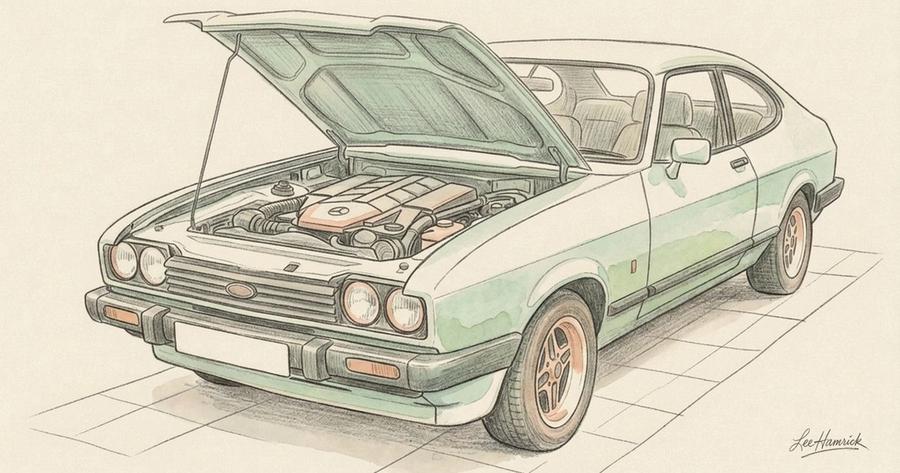
A Ford Capri with a Mercedes M113 V8 under the hood is either madness or genius. After 40 build videos, the answer is clearly both.
Let me tell you a story about a Ford Capri sitting in a workshop, staring down an engine that was never, ever supposed to go in it. Not a small-block swap. Not a turbocharged four-cylinder with attitude. A Mercedes M113 V8. All-aluminum, silky smooth, built for a Stuttgart sedan, and now being coaxed into a body shell that was designed when the most exotic thing Ford Europe could imagine was a Cologne V6. This is not a sensible project. This is the best kind of project.
The Capri always had that thing, that shape and that promise, a European pony car that said performance but often delivered something more modest. The bones were always right. The proportions were right. The cab-back silhouette, the long hood, the way it sat on its wheels, all of it was pointing toward something that the factory never quite delivered on. So a certain kind of person looks at a Capri and doesn't see what it was. They see what it could be. Then they start collecting parts.
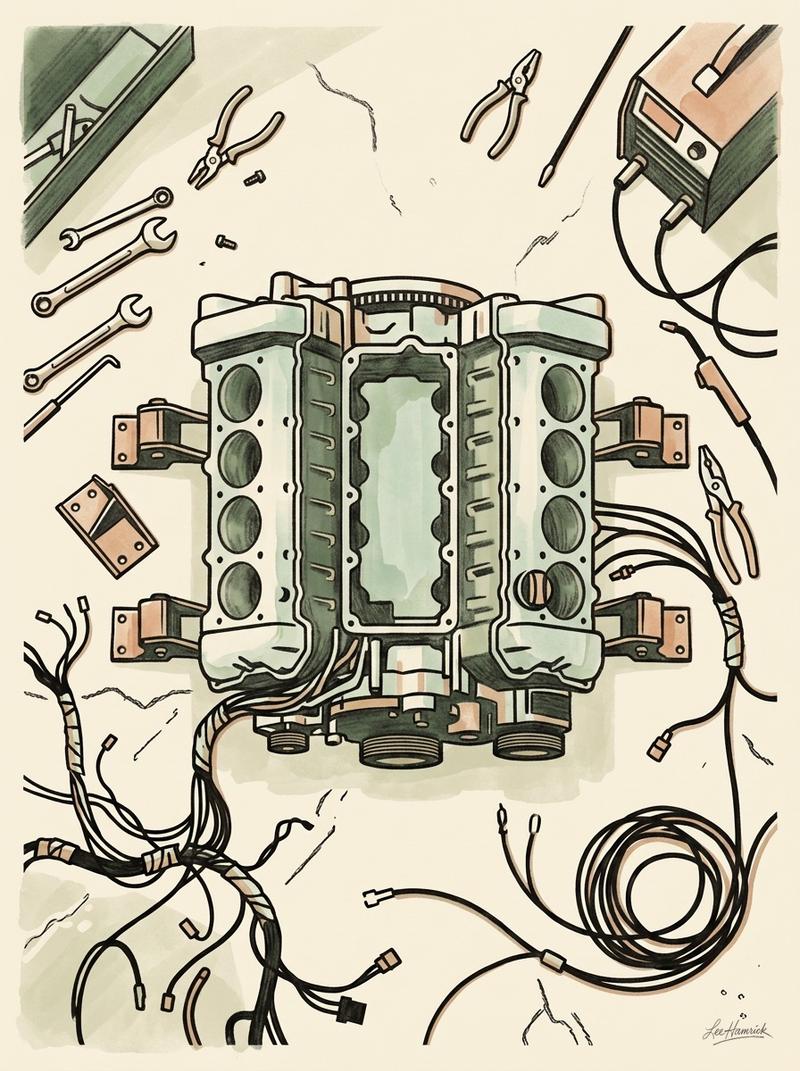
The M113 is a fascinating engine choice for a build like this, and not an obvious one. It's not the first V8 that comes to mind when someone says "I want to do a Ford Capri swap." You'd expect a small-block Ford, maybe a Coyote if the builder is feeling modern. The M113 is a different animal entirely. Mercedes used it across a wide range of vehicles, which means good parts availability and real-world durability data, but it also means the engine management, the wiring, the ancillaries, all of it was designed around a platform that has absolutely nothing in common with a lightweight European coupe from another era entirely. That's where the work lives. That's where 40 videos come from.
Fabrication is the part that separates the dreamers from the builders. Collecting an engine is easy. Test-fitting it is humbling. And then you start making things, motor mounts that have to be right the first time, custom exhaust routing through a body that was never meant to accommodate this, wiring that requires you to either understand Mercedes engine management deeply or learn it the hard way while staring at a diagram at eleven o'clock at night. Anyone who's done a serious engine swap will tell you that the first start-up moment, when the engine fires in its new home for the first time, is one of the best feelings in this hobby. It doesn't matter that it took months. It doesn't matter that something else immediately needs fixing. For about thirty seconds, everything is perfect.
What I respect most about a build like this is the documentation. Forty videos is a commitment. Most builds like this live and die in a forum thread that goes quiet around the third setback. Turning the whole thing into a serialized build diary, problem by problem, fabrication step by step, is genuinely useful to the community in a way that a glossy reveal video never could be. The failures matter as much as the wins. Probably more. When someone watches forty episodes of a build and sees every welding mistake and every wiring head-scratcher and every moment where the builder had to stop and completely rethink an approach, they're getting an education. They're also getting honest company, because every serious builder has been in that exact spot and it helps to know you're not the only one.
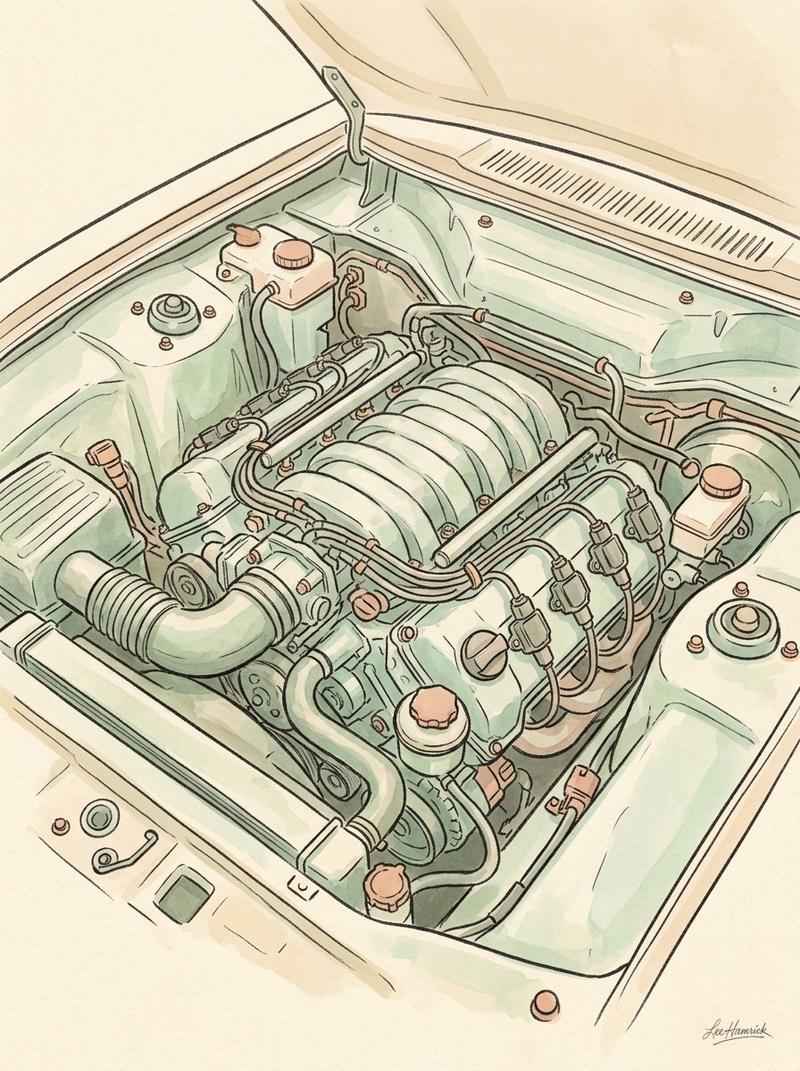
There's a particular kind of satisfaction that comes from a car that isn't supposed to exist. A production car is engineered by committees and constrained by liability and cost and manufacturing reality. A one-off build in someone's workshop is constrained by nothing except time, skill, and stubbornness. When you put a Mercedes V8 in a Ford Capri, you're writing a spec sheet that no product planner would ever approve, and that's exactly the point. The finished car doesn't have to compete with anything. It doesn't have to justify itself to a market segment. It just has to be what the builder imagined, which in this case is a classic European coupe with a smooth, torquey V8 that belongs to a completely different automotive tradition, now bolted in and making it work anyway.
Getting a build like this on the road after that many hours and that many setbacks is the whole thing. Not the horsepower number, not the dyno sheet, not the magazine feature. The first real drive, on actual roads, with an engine that was never supposed to be there now pulling cleanly through the gears, that's the payoff. That's what the forty videos were building toward. And if you've watched any serious home build go from a bare shell to a running car, you know that the builder is never quite done. There's always something to sort, something to refine, something that bothered them since video twelve that they finally have time to address now that the car actually moves. That's not a problem. That's the hobby.
The Ford Capri deserves more of this. It's a platform that rewards the kind of thinking that ignores what's practical and chases what's right. Someone looked at that shape, looked at a Mercedes V8, and decided those two things belonged together. After forty videos and more hours than anyone wants to count, it turns out they were correct.

Written by
Joshua Hawkins