Modified 2026 Subaru Outback Wilderness vs. Stock 2026 Toyota 4Runner Trailhunter: Real Dirt Test

Can a modded Subaru Outback Wilderness match a bone-stock Toyota 4Runner Trailhunter off-road? We tested both on actual trails.
Here's the thing about off-road comparisons: they're only useful if you're actually honest about what each truck is trying to do. The 2026 Toyota 4Runner Trailhunter is purpose-built. Three diff locks, old-school body-on-frame solidity, and a straight line from marketing to mud. The 2026 Subaru Outback Wilderness is something else entirely. It's what happens when you take a car-based crossover and bolt on adventurous intentions. They're not the same animal, and pretending otherwise does everyone a disservice.
But here's where I landed after a day alternating between both vehicles on some genuinely sketchy terrain outside Truckee: the Outback's modifications matter way more than most people give them credit for. Not because it becomes a 4Runner, but because it actually becomes capable in ways that honestly surprised me.
The 4Runner Trailhunter hits you first with raw mechanical confidence. That rear locker, the approach angle, the knowing that you have 33-inch all-terrain rubber and a transfer case that knows what it's doing. You climb into it and there's zero question about what happens next. Sit in the Outback, even modded, and you're asking questions. It's a different breed of nervous energy, but it's not the wrong kind.
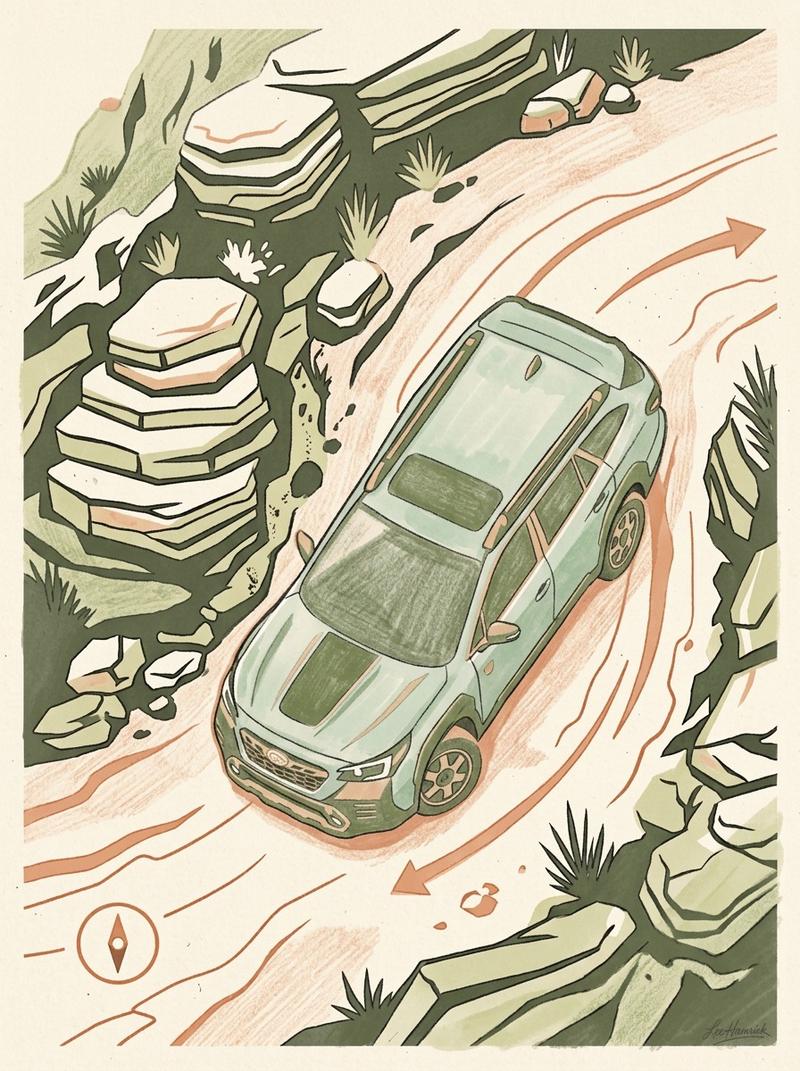
On rocky ascent and tight switchbacks where traction mattered more than sheer articulation, the Outback's lower center of gravity and lighter curb weight actually felt like an advantage. The car felt planted in ways the 4Runner, for all its capability, couldn't quite match. Steering feedback through the wheel came through cleaner. You felt what the terrain was doing under each tire. The 4Runner felt more distant, more insulated, more confident in a way that let you be lazier with inputs.
That matters if your idea of off-road driving is engagement and feel, not just clearance and locking differentials. The modified Outback Wilderness gets there with all-wheel drive that actually adjusts drive torque across axles, revised suspension geometry, and underbody protection. It's not faking it.
Where the 4Runner won decisively was on the genuinely stupidly steep stuff. Loose scree, deep ruts, terrain that wanted to roll the vehicle sideways. The Trailhunter's multi-mode traction control, that rear locker, and the raw mechanical advantage of truck geometry became obvious. The Outback got through it, but you felt the system working harder. It wasn't graceful. It wasn't confident. It was competent.
The 4Runner also handled the kind of obstacles that demand width and breakover angle. High-center boulder fields where the Outback had to pick its line carefully. The 4Runner just powered through. That's the job of that truck, and it does it without apology.
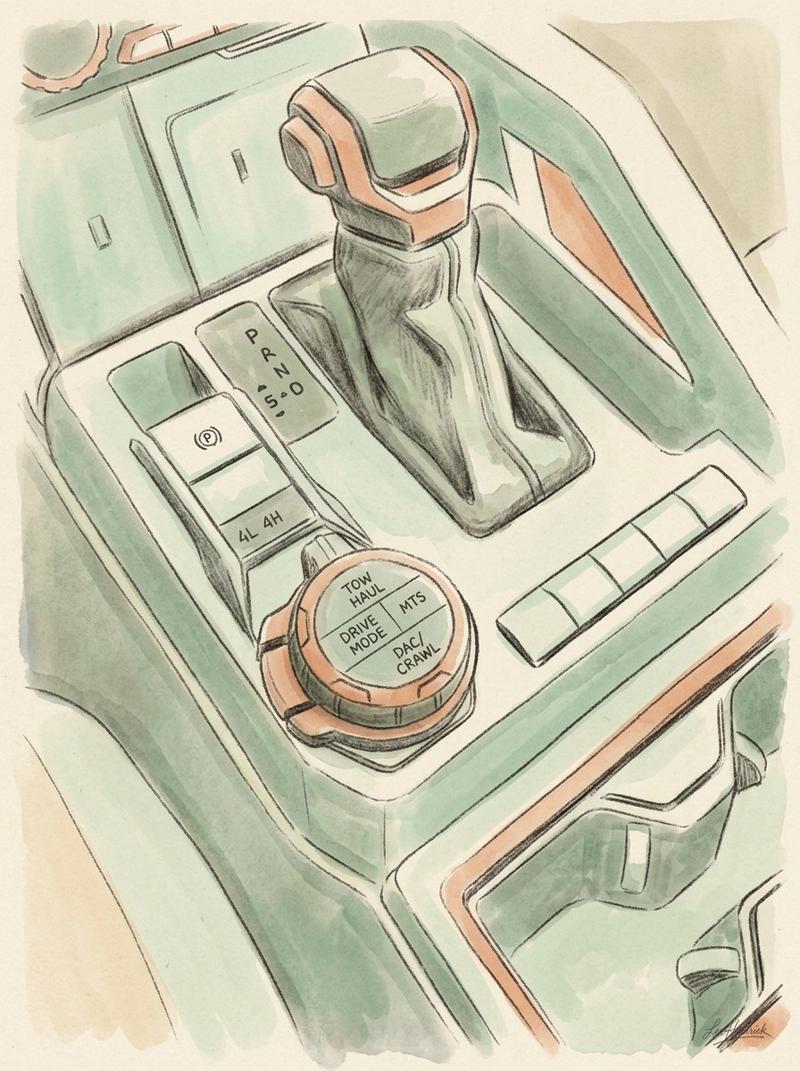
Interior ergonomics surprised me. The 4Runner has physical controls that actually work well, buttons that have real travel, dials that twist like they mean something. The Outback's interface relies more heavily on touchscreen and menu diving for basic functions. When you're muddy and cold and trying to change cabin temperature without looking at a screen, the 4Runner wins. That's not subjective. That's just how humans interact with machines when their hands are dirty.
If you care about tactile, analog controls in a vehicle, the 4Runner respects that. The Outback makes you swipe. For more on how we feel about screens replacing buttons, see our take on features we laughed at, then loved.
Real talk on tires: the Outback came on solid Bridgestone all-terrains that handled mixed terrain well. The 4Runner Trailhunter's BFGoodrich KO2s are a different level of off-road rubber. That's partly the budget difference between platforms, and partly because the 4Runner's designers know where their truck lives.
The cost math matters here. The modified Outback Wilderness probably has another six grand in genuine upgrades over stock. Better suspension, protective gear, decent all-terrain rubber. The 4Runner Trailhunter is stock, and stock is already plenty for serious work. If you're into the aesthetic and the adventure angle but mostly hit maintained forest roads and easy trail runs, the Outback's modifications get you 80 percent of the way there. If you actually live on technical terrain, the 4Runner's engineering and those locking differentials aren't optional. If budget is driving your decisions, our track car buyer's guide has the same honest framing for performance purchases.
What impressed me most about the Outback was that it didn't pretend to be a 4Runner. It did its own thing, and that thing is lighter, more responsive, more engaging on moderate terrain. You trade payload and true extreme-terrain credibility for a vehicle that feels more like you're driving rather than commanding. Both are valid. Neither is a lie.
The 4Runner Trailhunter is the answer if you want a truck that's built first, compromised second. The modified Outback Wilderness is the answer if you want something that can actually tackle real adventure and feel alive doing it, without needing to be a tool-carrying off-road monster. Different purposes. Honest execution on both sides.
After a day swapping between them, I'd trust either one on moderately aggressive terrain. But on truly sketchy ground, with real consequences for getting stuck, the 4Runner has that extra mechanical certainty that you can't modify your way into a car-based platform. And that certainty matters when it matters.
Written by
Kathlien "Kat" Mangino