Project Fired-Bird: What It Actually Takes to Wake Up a 1968 Pontiac Firebird

A deep dive into restoring a first-gen 1968 Pontiac Firebird, covering what makes these cars worth saving and what makes them complicated to save.
There is a specific kind of optimism that leads someone to name their project car. Not "the Firebird" or "my Pontiac" but Project Fired-Bird, with a hyphen and a capital B, like it already has a personality worth preserving. I know that optimism. I have felt it standing next to project cars that cost me three weekends just to understand, and I respect anyone who commits to it on a first-gen Firebird, because that car is asking a lot of you from the moment you put your hands on it.
The 1968 Pontiac Firebird is one of those cars that rewards the kind of obsessive attention that most people would spend on something else. It is not the simplest classic to work on, and it is definitely not the cheapest, but the details here are worth paying attention to, because 1968 was specifically an interesting year to land on.
The Firebird launched in 1967 as a direct response to the Ford Mustang, and the platform it shared with the Chevrolet Camaro meant it arrived with a degree of mechanical seriousness underneath the Pontiac styling. By 1968, the car had already absorbed its first round of running changes. The external side vents that defined the 1967 car were gone, replaced by cleaner body lines, and the ventless side glass gave the greenhouse a more swept look that many people consider the cleaner design. It is a small thing, but if you are going to spend years on a car, those small things start to matter a great deal.
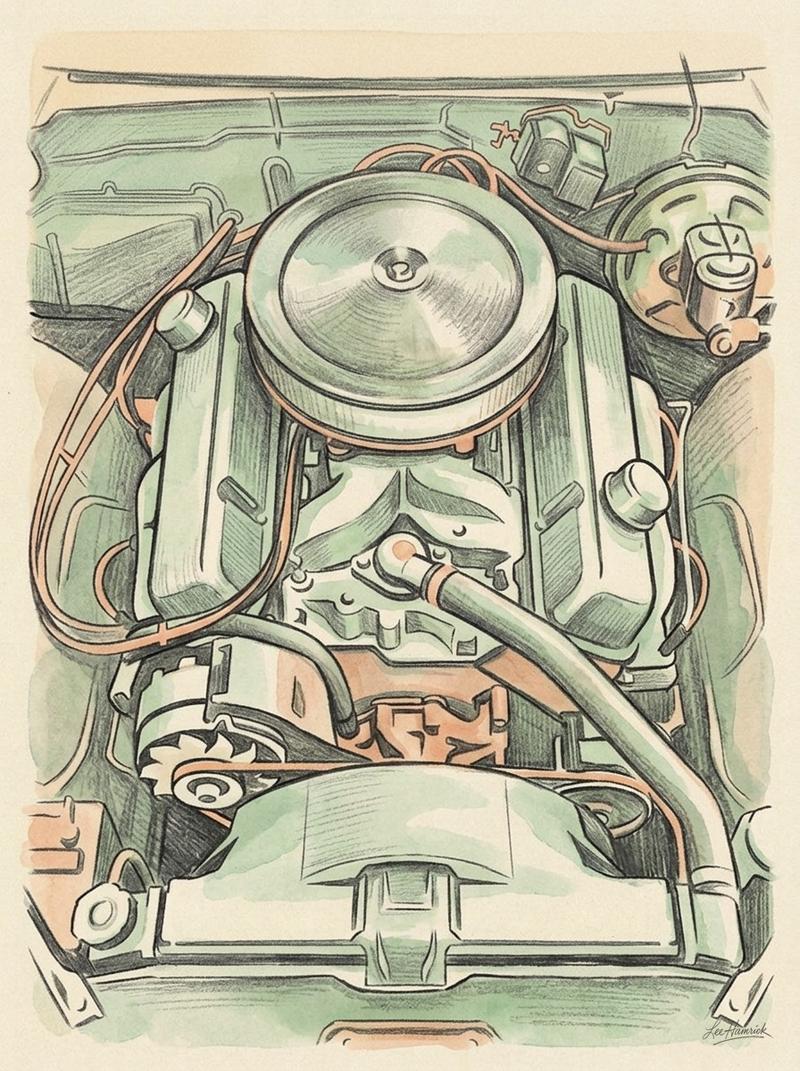
What made the first-gen Firebird genuinely interesting from an engineering standpoint was the engine lineup. Pontiac, unlike Chevy, insisted on installing its own engines rather than borrowing from the small-block Corvette parts bin. The 1968 cars could be had with a range of powerplants, from a base inline-six up through the 400 cubic inch V8 in the high-output Firebird 400 trim. The 400 was rated at 330 horsepower in standard form, with the Ram Air version pushing that figure to 340 horsepower. Those were gross horsepower ratings measured by the standards of the era, so direct comparisons to modern net figures involve a fair amount of mental adjustment, but the point stands: Pontiac built engines that were specific to Pontiac, and that specificity is both the charm and the headache of working on these cars today.
Parts availability for the Pontiac 400 is not the same conversation as parts availability for a small-block Chevy. The aftermarket exists, and it is not tiny, but it requires more homework. Rebuilt carburetors, gasket sets, timing components, and internals are out there, but you are unlikely to walk into any parts store and walk out with everything you need in an afternoon. If you are deep in a Firebird restoration right now, you probably already know which vendors you trust and which forums have the information worth reading. If you are just starting, I would budget more time for sourcing than you initially think is reasonable, and then add some more.
The body on a first-gen Firebird is where the real patience gets tested. These cars are over fifty years old, and unibody construction means rust does not stay politely in one corner. The typical trouble spots are the floors, the rockers, the rear wheel wells, and the trunk floor, and finding a car that has been stored well enough to avoid serious damage in all of those areas at once is genuinely difficult. A car with surface rust and solid structural metal is a different project from a car that needs sections cut out and new metal welded in, and both of those are different from a car someone already attempted to patch with filler or fiberglass and then stopped. The third category is the one that can turn a project into something that costs more than it will ever be worth, which is not necessarily a reason to avoid it, but it is a reason to know what you are getting into.
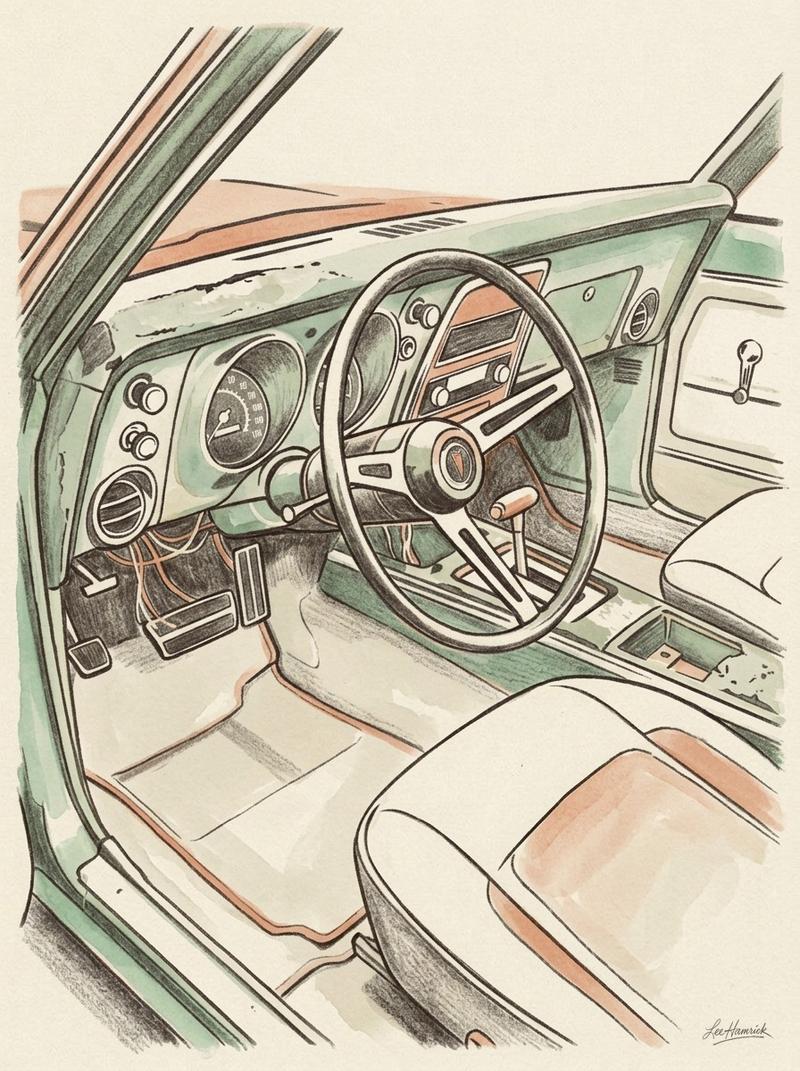
Interior restoration on a 1968 Firebird is one of those areas where the reproduction parts market has genuinely matured. Door panels, seat covers, carpet sets, and dashboard components are available through several vendors in degrees of quality that range from acceptable to quite good. The factory gauge cluster on these cars has a particular look that fits the era without being overwrought, and getting it working properly is one of those finishing details that changes how the whole car feels from the driver's seat. There is something about accurate instrumentation in a classic that makes the experience feel more complete, even if the gauges themselves are not especially precise by modern standards.
The suspension on the first-gen Firebird is a conventional setup for its era, with front upper and lower control arms and a live rear axle on leaf springs. That architecture is well understood and relatively easy to upgrade if the goal is improved handling rather than strict factory correctness. Aftermarket front subframe connectors add rigidity to the unibody, which on a car this age has usually flexed enough over its lifetime that the improvement is noticeable. Upgraded front sway bars, tubular control arms, and better shocks are all well-documented paths if the project is headed toward something that drives as well as it looks.
The name Project Fired-Bird carries a specific kind of intention. It is not a number-matching restoration where the goal is a car exactly as Pontiac built it in 1968, and it is not a full restomod with a modern LS swap and Brembo brakes hiding behind the stock wheels. It is something in between, which is honestly the most interesting place to be with a car like this, because it means the decisions are being made based on what the person building it actually wants the car to do. That is a more honest way to build a car than chasing someone else's definition of correct.
I spent way too long thinking about what a first-gen Firebird actually is in the context of the cars it competed with, and I keep coming back to the same answer: it is a car that tried harder than it needed to. Pontiac did not have to develop its own engines for a pony car. It could have borrowed the small-block and called it done. That it didn't is the reason Project Fired-Bird is worth the effort, and probably the reason whoever named it that way feels the same.
It's probably not as hard as I'm making it sound. But it's not simple either, and the people who name their projects usually find that out somewhere around the second or third year. That's not a reason to stop. It might be the best reason to keep going.

Written by
Jeremy Dorando