The Great American Muscle Graveyard: What Barn Finds Really Look Like

Classic Camaros, GTOs, Chevelles, and Challengers hiding in barns across America, what barn find hunting actually involves and why these cars matter.
Somewhere in this country, right now, there is a first-generation Camaro sitting under a tarp in a barn outside a small town nobody has ever heard of. The owner's kid doesn't know what it's worth. The owner's grandkid doesn't know it exists. And it has been sitting there, slowly becoming either a treasure or a parts car, for the better part of forty years.
That's not a fairy tale. That's Tuesday.
The barn find phenomenon is real, it's massive, and it is not slowing down. Richard Rawlings and the Gas Monkey crew have spent years chasing exactly this, loading up and driving thousands of miles to track down Pontiac GTOs, Chevrolet Chevelles, Dodge Challengers, Pontiac Firebird Trans Ams, Chevrolet Monte Carlos, and whatever else happens to be rusting quietly in forgotten corners of rural America. The footage is compelling television. But what it actually captures is something more interesting than a TV show.
It captures a very specific window in American automotive history that is closing, fast.
Why These Cars Disappeared in the First Place
The muscle car era ran hard and ended hard. The combination of the 1973 oil crisis, tightening emissions regulations, and spiking insurance rates on high-displacement V8s basically killed the segment in a span of about three years. Cars that were the pride of a driveway in 1969 were, by the late 1970s, either thrashed, traded in for something sensible, or just... parked.
Parked is where things get interesting.
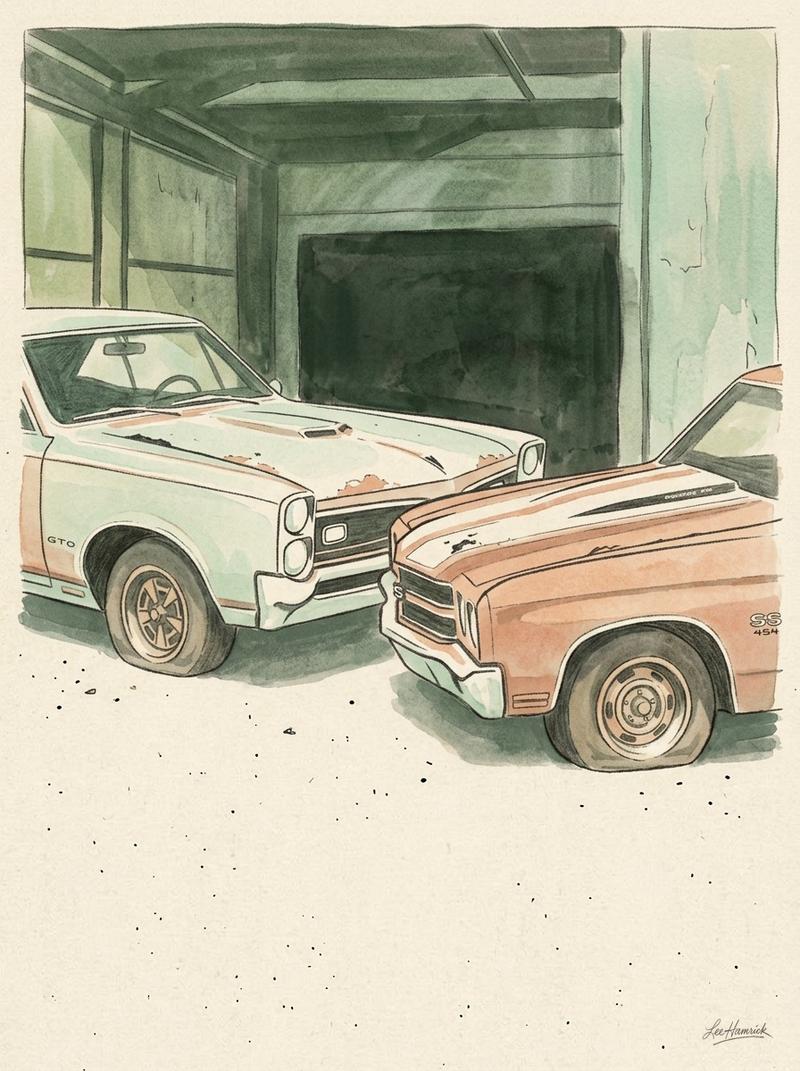
A lot of these cars didn't get scrapped. They got pushed into a garage or a barn or a machine shed with the vague intention of fixing them up someday. Someday became a decade. A decade became four decades. The guy who parked it got old or died, and the car sat there accumulating the following:
- Rust. Obviously.
- Rodent damage that would make a grown man cry.
- Seized engines from sitting with water in the cylinders.
- Dried-out brake lines, rotted fuel lines, and rubber that disintegrated sometime around the Reagan administration.
- Value. Lots and lots of value, if the body is solid and the numbers match.
That last part is the whole game. A numbers-matching, documented muscle car with a solid body is worth real money regardless of mechanical condition. You can rebuild an engine. You cannot unbend a crushed quarter panel back to factory spec and call it original. Sheet metal is the asset. Everything else is labor.
What Gas Monkey Actually Does With These Cars
Look, I'm just going to say it: the television version of barn finding is cleaned up for cameras. The actual process of sourcing these cars involves a lot of dead ends, a lot of family members who have wildly inflated ideas about what grandpa's project car is worth, and a lot of situations where a car that looked promising in a photo turns out to have a floor you could put your foot through.
What Rawlings and the Gas Monkey operation do well is the acquisition side. They move fast, they know their numbers, and they have the shop infrastructure to handle volume. That means they can take on cars that a private buyer might walk away from because the mechanical resurrection alone would be a year-long project.
The cars they chase are the ones that defined American performance in the late 1960s and early 1970s. The Chevelle, especially in SS trim with big-block power, is one of the most desirable barn find targets in existence. The first-generation Camaro from 1967 through 1969 sits in the same conversation. The Pontiac GTO, which basically invented the muscle car segment when it launched in 1964, commands serious attention whenever one surfaces. Dodge Challengers from the early 1970s, particularly the R/T variants, have a following that has not dimmed in fifty years.
These are not obscure cars. They are not niche collectibles. They are the core of what American performance meant to an entire generation, and they are genuinely getting harder to find in restorable condition.
The Numbers Problem Nobody Wants to Talk About
Here's where the tech background comes in handy. The documentation on these cars matters more than most buyers fully appreciate, and the fraud in this market is not subtle.
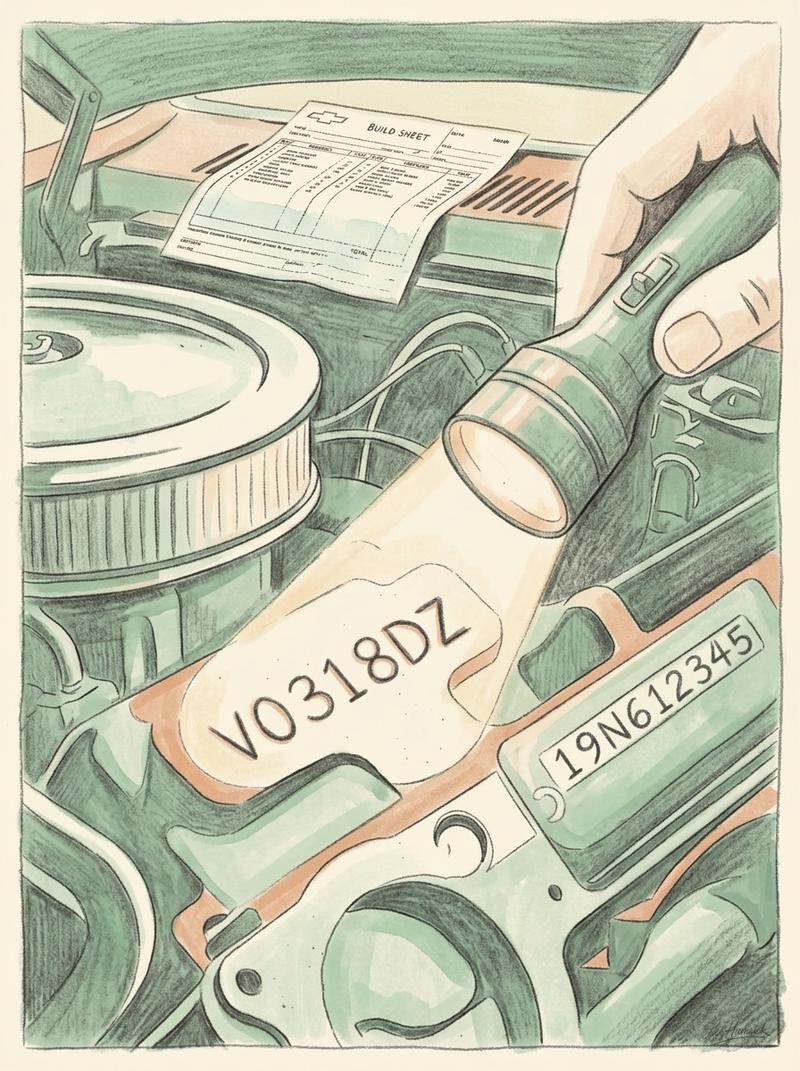
A real matching-numbers 1969 Camaro Z/28 is a very different financial instrument than a base-model Camaro with a Z/28 drivetrain dropped in. The VIN decoding on these cars is detailed enough that knowledgeable buyers can decode production information directly from the tag. Partial VINs were stamped on engine blocks. Build sheets were sometimes left in the car at the factory and occasionally survive under carpet or inside door panels after half a century.
The point is this: if someone is selling a barn find muscle car at barn find prices, meaning cheap, one of two things is happening. Either the car is in significantly worse condition than it looks, or the documentation doesn't hold up. Legitimate numbers-matching examples from desirable model years have a floor price that has not been low in a very long time.
I don't care if this is controversial: the days of stumbling onto a fully documented, solid-body, big-block muscle car for a few thousand dollars because the seller doesn't know what they have are largely over. The internet killed that market. Everybody knows what a Chevelle SS is worth. Everybody has looked it up. The true barn finds that come in under market value are almost always cars with serious problems, serious documentation gaps, or both. If you're hunting for deals, knowing where to shop matters as much as knowing what to buy.
Why It Still Matters That People Are Looking
None of that means the hunt is pointless. The opposite, actually.
Every Pontiac Firebird Trans Am that gets pulled out of a barn and properly restored is a car that isn't going to a crusher. Every GTO that gets documented, titled, and returned to running condition is a piece of American automotive history that survives another generation. The economics of restoration on these cars have never been more favorable, because the finished product values have never been higher.
What shows like Gas Monkey's barn find compilations do, at their best, is remind people that these cars are still out there. Not in huge numbers, not in easy-to-find locations, not in condition that makes the math simple. But they exist. They are sitting in buildings across the country waiting for someone to care enough to go find them.
That someone driving thousands of miles to knock on a stranger's door and ask about the car in the barn is doing something genuinely useful for the hobby, even when it makes for good television at the same time. And once you do find one, knowing where to source parts is the next battle.
The muscle car era is not coming back. What happened between 1964 and 1973 in American performance was a specific cultural and industrial moment that produced cars nobody had built before and nobody has really built since. What's left is what's left. Finding it, preserving it, and keeping it running is worth the effort.
The barn is not going to empty itself.

Written by
Vince Russell