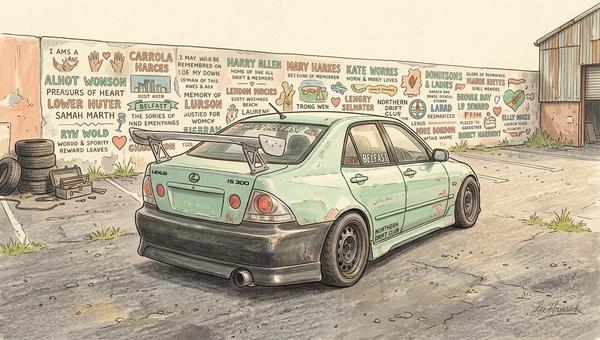
The Tiny Workshop That Changed How Enthusiasts See the Toyota Corolla

Inside MotorFix, the small Japanese workshop where Nozomu Sakai turned humble Toyota Corollas into machines that redefined JDM tuner culture.
There is a version of this story where a small workshop in rural Japan stays unknown forever. A craftsman works, builds cars that matter only to the people who see them in person, and the rest of the world never finds out. That did not happen with MotorFix, and it did not happen with Nozomu Sakai.
What Sakai built, in a space most people would call too small and too far from anywhere, was a body of work centered on a car most people would call too ordinary: the Toyota Corolla. The fact that those two sentences can coexist in the same paragraph is essentially the whole point.
Why the Corolla, and Why It Matters
The Toyota Corolla has been available in the United States in one form or another since 1968. It has been reliable, affordable, and almost aggressively unremarkable for most of that time. That is not a criticism. It is the car's entire value proposition, and Toyota has executed it with mechanical discipline for decades.
But somewhere inside that reputation for dependability is a performance skeleton that most owners never find. The rear-wheel-drive Corolla generations, particularly the AE86 that American buyers knew as the Corolla SR5 and GT-S in the mid-1980s, carried a high-revving twin-cam four-cylinder and a chassis balance that rewarded a driver willing to learn the car rather than just operate it. In Japan, that car became the foundation of an entire performance culture. In the US, it mostly faded quietly into used car lots.
Sakai understood what the car actually was underneath its reputation. His workshop, MotorFix, started treating Corollas not as appliances to be maintained but as platforms to be developed. The distinction sounds simple. The results were not.
What MotorFix Actually Does
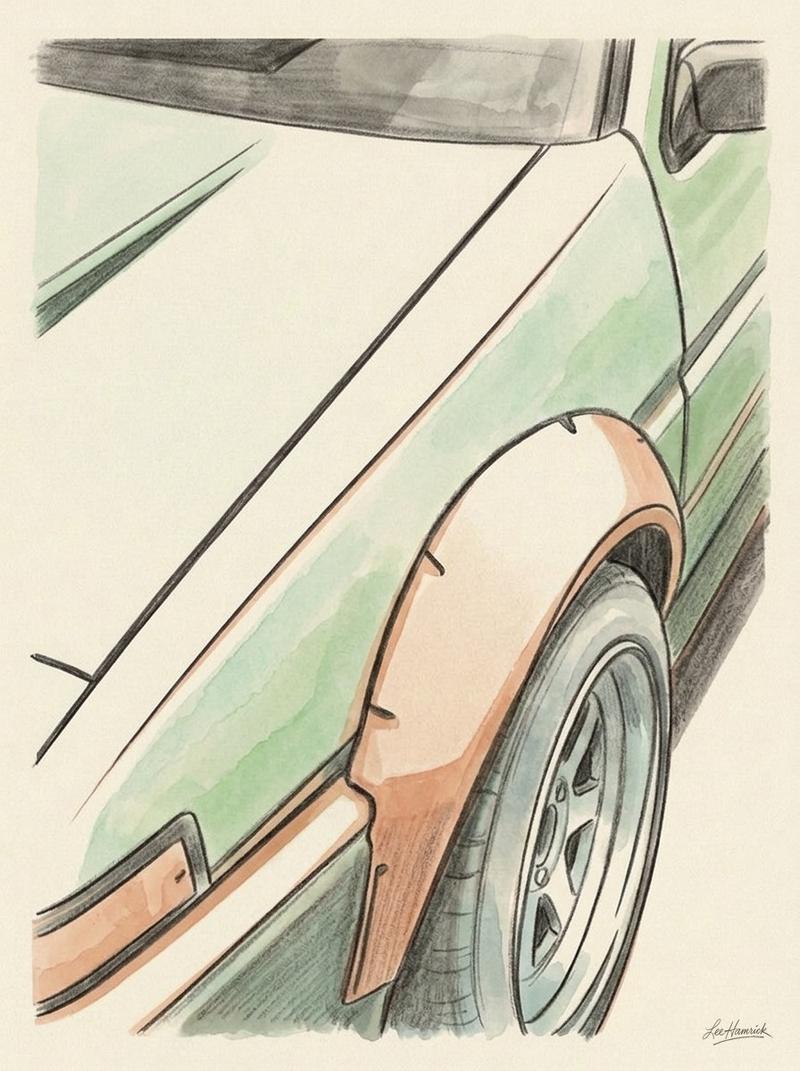
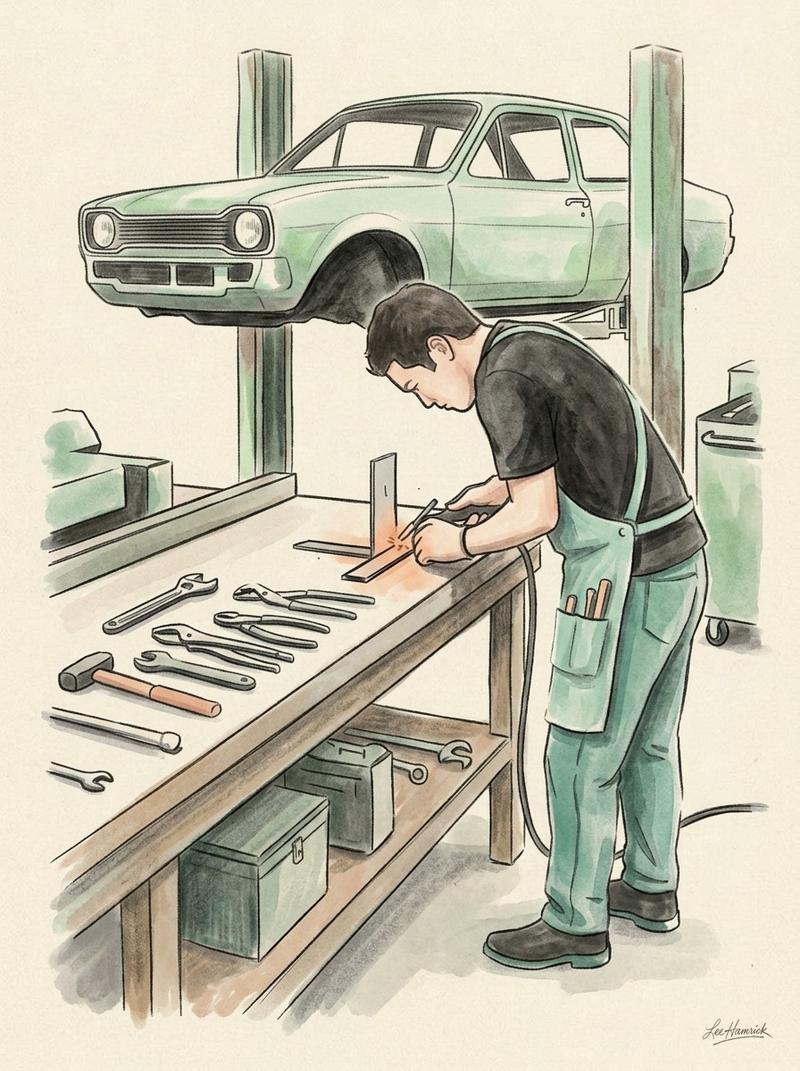
Small workshops in Japan tend to specialize tightly, and MotorFix is no exception. The work is meticulous and specific: bodywork, fabrication, and chassis preparation carried out on cars that most tuners would not bother with. The Corolla, in Sakai's hands, gets treated with the same care and attention that a larger, better-funded shop might apply to a Supra or a GT-R.
That is not a small thing. Resource allocation in a tuner shop is a statement of values. When you spend serious time and serious skill on a car that nobody expects serious time and serious skill to be spent on, you are making an argument about what matters in performance vehicles. The argument MotorFix makes is that the platform is not the point. The execution is.
The fabrication quality that comes out of the workshop reflects someone who is not cutting corners to hit a price point. Panels fit. Welds are clean. The cars that leave MotorFix do not look like they were built in a hurry or on a budget that did not allow for doing it right. They look like someone cared about every millimeter, which, given what is documented about how Sakai works, is exactly what happened.
The Enthusiast Effect
The reason a rural Japanese workshop building modified Corollas became a story that travels internationally is not complicated. Enthusiasts who found out what Sakai was doing recognized something in the work that aligned with a specific set of values: that a car does not have to be expensive or exotic to be worth taking seriously, that craftsmanship applied to ordinary machinery is its own kind of excellence, and that the gap between a humble car and a remarkable one is mostly labor, knowledge, and intent.
Those ideas travel. They translate across language barriers because they are not really about the Corolla specifically. They are about how you approach a project. Every backyard mechanic who has ever decided a beater was worth the work, every HPDE driver who showed up in something their instructor looked at sideways before realizing it was faster than it had any right to be, every person who bought the car they could afford and made it the car they wanted, recognizes what MotorFix is doing.
The specific cars Sakai builds are Japanese-market machines, and not all of them translate directly to US trim levels or configurations. But the approach does. The AE86 Corolla GT-S that American enthusiasts know, the one with the 4A-GE and the rear-wheel-drive layout that made it a cult car here, is close enough to what Sakai works with that the connection is clear to anyone who has spent time in that chassis.
What a Workshop Like This Means for the Culture
JDM tuner culture, as it is understood outside Japan, is often filtered through the biggest names and the most expensive builds. Shops with massive social followings, builds with six-figure price tags, cars that exist primarily to generate content. That is one version of the culture, and it is not useless, but it is not the whole picture.
MotorFix represents something closer to the actual root: a person with deep knowledge of a specific platform, working carefully in a specific place, producing specific cars. The scale is small. The precision is high. The philosophy is that you do not need a lot of space or a famous name to build something worth paying attention to.
For American enthusiasts, the parallel is not hard to find. The guy running a one-bay shop somewhere in the midwest who actually knows the Honda B-series better than anyone within 200 miles. The autocross builder working out of a two-car garage who consistently produces the fastest Miata in the region. The mechanic who knows exactly which Mustang subframe connectors actually stiffen the chassis and which ones are marketing. Those people exist everywhere. Most of them will never be famous. Some of them will build cars that matter to everyone who drives them.
The Corolla as a Lens
The choice to center a workshop's identity on the Corolla is worth sitting with for a moment. Toyota sold more than 50 million Corollas worldwide by some counts. It is, by any reasonable measure, the default car. Choosing it as your platform is not a statement about exclusivity. It is the opposite.
What Sakai demonstrates is that the default car, handled by someone who knows what they are doing and cares about the result, can become something genuinely interesting. That is a harder argument to make than it sounds. Most people have decided what a Corolla is before they ever look closely at one. Changing that perception requires the cars themselves to do the work, and the cars that come out of MotorFix apparently do exactly that.
The numbers that define a tuner build, horsepower, lap times, weight, tend to be the first thing people reach for when they want to explain why a car matters. Those numbers are real and they are worth tracking. But the reason a small workshop in rural Japan became part of a larger conversation about what enthusiast cars can be is not captured in a dyno sheet. It is captured in the fact that someone looked at one of the most ordinary cars ever made and decided it deserved serious attention. Then they went and gave it that attention, one car at a time, in a shop most people will never visit.
That is the work. That is the story.

Written by
Jason Smith