What It Actually Takes to Turn a Barn-Find Pickup Into a Half-Track

A rusted barn-find pickup gets stripped to bare metal, rebuilt from the ground up, and fitted with continuous tracks for serious off-road use. Here's what that
There's a certain kind of project that starts with a photograph someone texts you at an odd hour. The truck is barely visible behind a wall of old hay bales. The caption just says, "you want this?" And the correct answer, if you're wired a certain way, is yes before you've even figured out what it is.
That's the basic shape of how half-track conversions tend to begin. Not with a plan, exactly. With a truck that has no business being saved, sitting in a barn that smells like 1987, and some stubborn optimism that the bones are good enough to build on. Sometimes they are. When they are, what comes out the other end is one of the more genuinely strange and capable machines you can put together in a home shop.
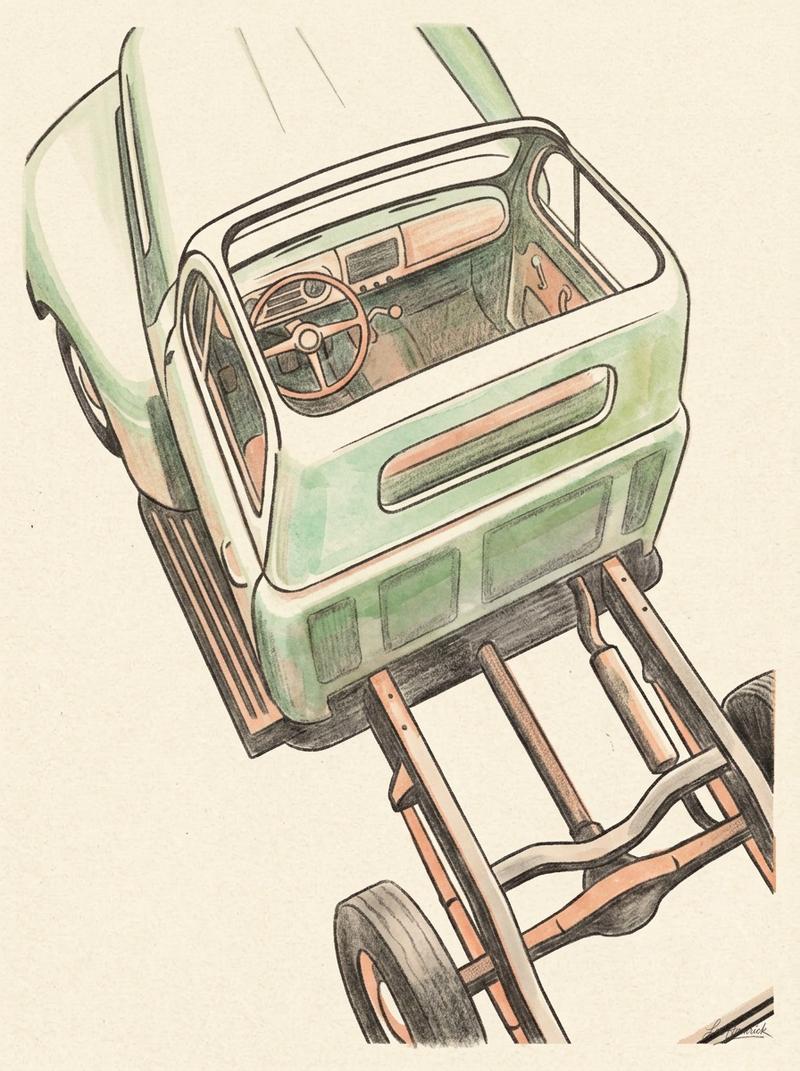
The restoration side of a build like this is straightforward in concept and brutal in practice. Rust removal on a truck that's spent years or decades in storage isn't a weekend grind-and-prime job. You're looking at full panel strip-downs, media blasting to bare metal, and a serious assessment of what's structural and what's decorative. On an old pickup, the cab corners, the rockers, and the floor are almost always the bad news. The frame, depending on how it was stored, can go either way. You find out with a wire wheel and a lot of patience.
Engine work on a vintage truck that's been sitting falls into a predictable sequence. The rebuild isn't glamorous. You're pulling heads, checking bores, replacing anything with a seal or a gasket, and deciding whether the rotating assembly is worth keeping or whether a fresh short block makes more sense given the rest of the build's ambitions. For something that's going to get worked hard off-road, the honest answer is usually that you spend the money now or you spend it later on the trail when it matters more.
All of that is restoration work. Real work, satisfying work, but familiar to anyone who's brought a tired vehicle back to running condition. The part that separates a half-track build from a standard restomod is what happens at the rear axle.
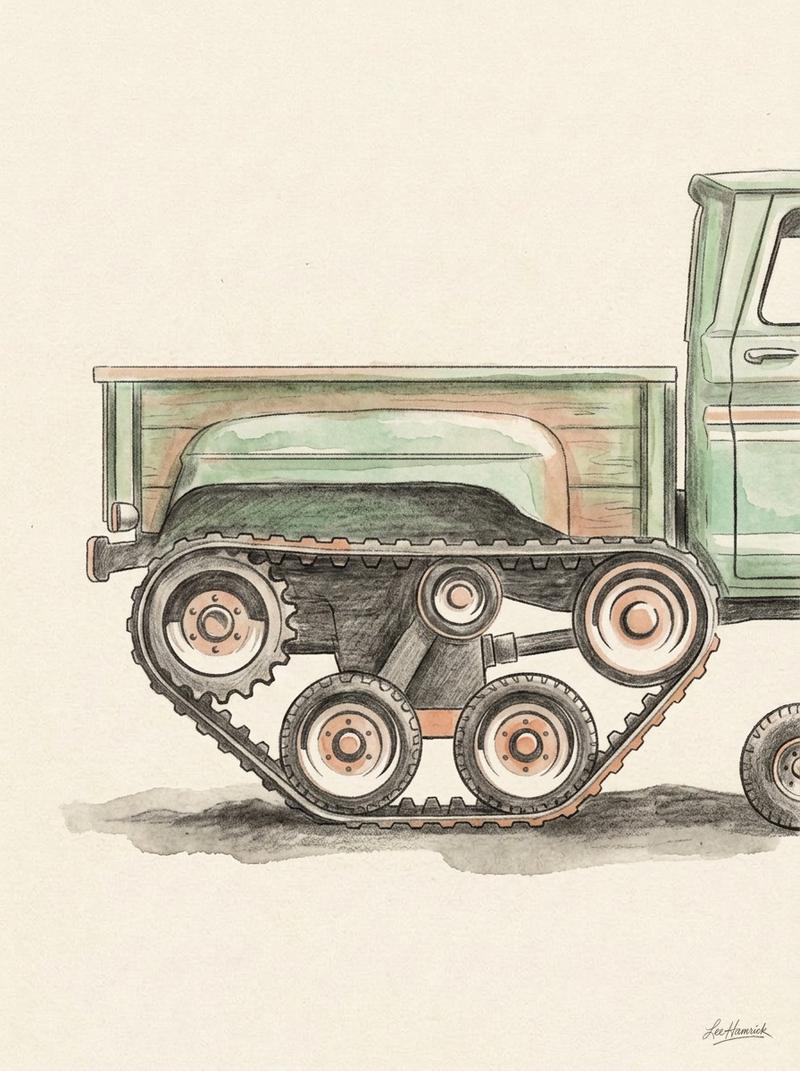
Converting the rear of a pickup truck to run continuous tracks instead of wheels is not a simple bolt-on exercise. You're replacing the driven wheels with a track system that typically uses a rear drive sprocket off the axle, a front idler, and a series of road wheels in between to support the track's weight and distribute load. The geometry of how that system sits relative to the frame, the suspension travel it allows or doesn't allow, and how it handles the torque multiplication that tracks create at low speed all have to be thought through carefully.
Track systems for vintage pickups are almost always custom fabricated or adapted from agricultural and military surplus parts. Neither path is cheap, and fabricating your own requires a real understanding of the loads involved. Tracks don't forgive sloppy alignment the way a tire does. If the tension is off or the idler isn't true, you'll shed a track in the field, and that's a bad day by any measure.
The front axle on a half-track stays conventionally wheeled, which is where the machine gets its name and its character. You steer from the front wheels, but the rear tracks are what drive and what pull. In deep mud, loose snow, or soft ground where a wheeled truck would dig itself into a hole, the tracks spread the vehicle's weight over a much larger contact patch. A tire concentrates load on a few square inches of rubber. A track might spread that same load over several square feet of ground. The difference in what the vehicle can cross is significant.
The tradeoff is speed, handling on hard surfaces, and complexity. Half-tracks are not highway machines. They're slow, they're loud, and they wear pavement aggressively. On a dirt road or across open ground they're in their element. On anything paved they're a novelty at best and a liability at worst. A build like this is purpose-built for a specific kind of use, and the builder needs to be honest about that going in.
Interior work on a restoration this thorough tends to reflect how serious the builder was about the whole project. Fitting a leather interior to a truck that's going to spend its life in the mud is a choice that says something about the philosophy behind the build. It's not practical, exactly, but neither is the project itself. There's a long tradition in custom truck building of putting a refined cabin inside a machine that's going to get genuinely filthy, and if you've already done the hard work of a full restoration and a track conversion, building out the interior properly isn't a strange decision. It's a consistent one.
What a build like this ends up being is a working piece of functional sculpture. It doesn't fit neatly into the categories we use for trucks. It's not a show truck, not a daily driver, not a stock restomod. It's a machine built to do a specific thing very well, assembled from a vehicle that most people would have hauled to the scrapper, by someone who looked at that rust and saw something worth saving.
That's the part I find genuinely compelling about projects like this. The barn-find starting point isn't just a romantic detail. It sets the terms for the whole build. You're working with what you have, solving problems the original engineers never anticipated, and building toward a capability that didn't exist when the truck rolled off the line. The rust and the rot and the years sitting dark in a barn are just the price of admission for the version of the truck that comes out the other end.
Not every barn truck deserves it. But when the bones are there, and the will is there, what comes out of a build like this is something you can't buy anywhere.

Written by
John Buchanan