Oil Analysis: Why Blackstone Labs Catches What Your Dashboard Misses

Blackstone Labs turns used engine oil into a diagnostic report. Here's what oil analysis actually reveals, when it's worth $40, and when it isn't.
Your engine's warning lights are reactive. Oil analysis is predictive. That distinction matters more than most owners realize, and it's why Blackstone Labs has been turning engine oil into a diagnostic report since 1985, catching problems your scan tool won't see until they become expensive.
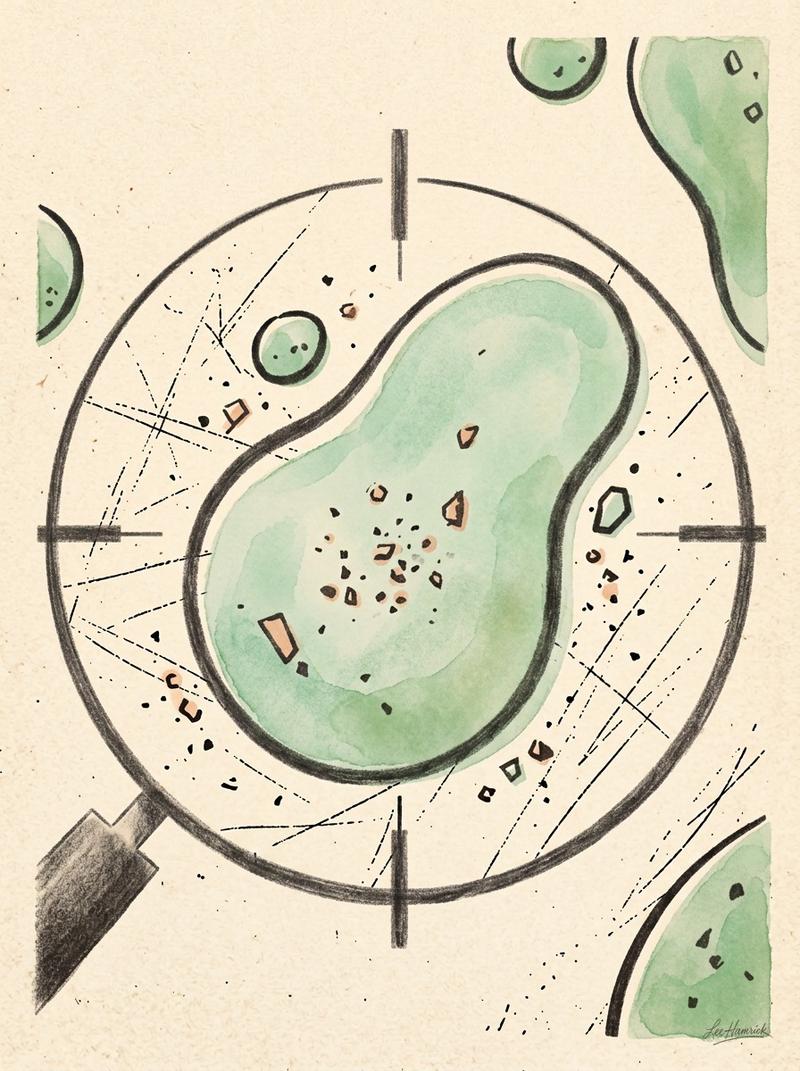
The concept feels boutique until you understand the math. Engine wear debris carries measurable diagnostic information: iron usually points to cylinder-wall or valve-train wear, copper and lead to bearing shells, and rising silicon to dirt getting past the air filter. A professional lab can read these fingerprints and quantify wear rates that haven't yet triggered your check engine light. By then, you're looking at a compression test, a borescope, or worse.
What Oil Analysis Actually Reveals
A standard Blackstone report measures wear metals (iron, copper, aluminum, chromium), additive depletion (zinc, magnesium), viscosity, water content, fuel dilution, silicon, antifreeze, flashpoint, solvents, insolubles, and oxidation. It also evaluates your oil filter's effectiveness. The data lands in a report that compares your engine's wear signature against a baseline for your specific vehicle, engine family, and operating history.
Most owners expect oil analysis to predict catastrophic failure. That's not quite it. What it does is establish a wear trend. A single sample tells you nothing in isolation. A series of samples showing a consistent climb in iron over successive intervals tells you cylinder walls or the valve train are wearing faster than baseline, which points toward ring seal, cam lobe condition, or similar steel-on-steel contact. If lead and copper are climbing faster than iron, the picture changes: those are the soft overlay metals in your bearing shells, and a lead-heavy skew relative to iron is Blackstone's own flag for bearings wearing faster than the rest of the engine. That's actionable in a different direction than a cylinder-wall problem. As for the specific particle counts that move Blackstone's technicians from green to yellow to red, that interpretation methodology isn't publicly documented in detail, and the company hasn't published specific threshold tables. The written reports include their narrative assessment, but the internal decision criteria stay inside the lab.
The viscosity data often surprises people. Oil doesn't just thin from heat and time. Fuel dilution (unburned fuel leaking past the rings into the pan) thins it further and alters the shear stability profile. A report showing viscosity loss of 15 percent at 100 degrees Celsius over 5,000 miles might indicate cold-start enrichment issues, a leaking fuel injector, or cylinder-wall scoring. Your dash won't light up for any of these problems until they're expensive.
Water content matters too, especially if you're driving short trips or in high-humidity climates. Engines that never fully warm up trap condensation in the oil. Blackstone can tell you whether your cold-weather routine is corroding bearing surfaces from inside.
When Analysis Saves Money
The cases where oil analysis genuinely prevents catastrophe fall into three categories: engines running extended service intervals, high-mileage vehicles with uncertain history, and performance builds where stress testing reveals design weaknesses before failure.
Someone running 10,000-mile intervals on a naturally aspirated four-cylinder probably learns nothing useful. The wear metals stay flat, the additives hold up, and the engine will outlast the car's second owner anyway. This is where oil analysis provides confidence rather than diagnosis, which is fine but not essential.
The economics shift with older vehicles or track cars. A 200,000-mile diesel truck with unknown maintenance history can yield real value from quarterly oil sampling. At $40 per report, four samples a year runs $160, which is the right number to put in your budget if you're planning to do this consistently. Whether that cost is justified depends entirely on what you're trying to learn and how long you plan to own the vehicle. Same math applies to any turbocharged or supercharged engine operating at elevated stress levels.
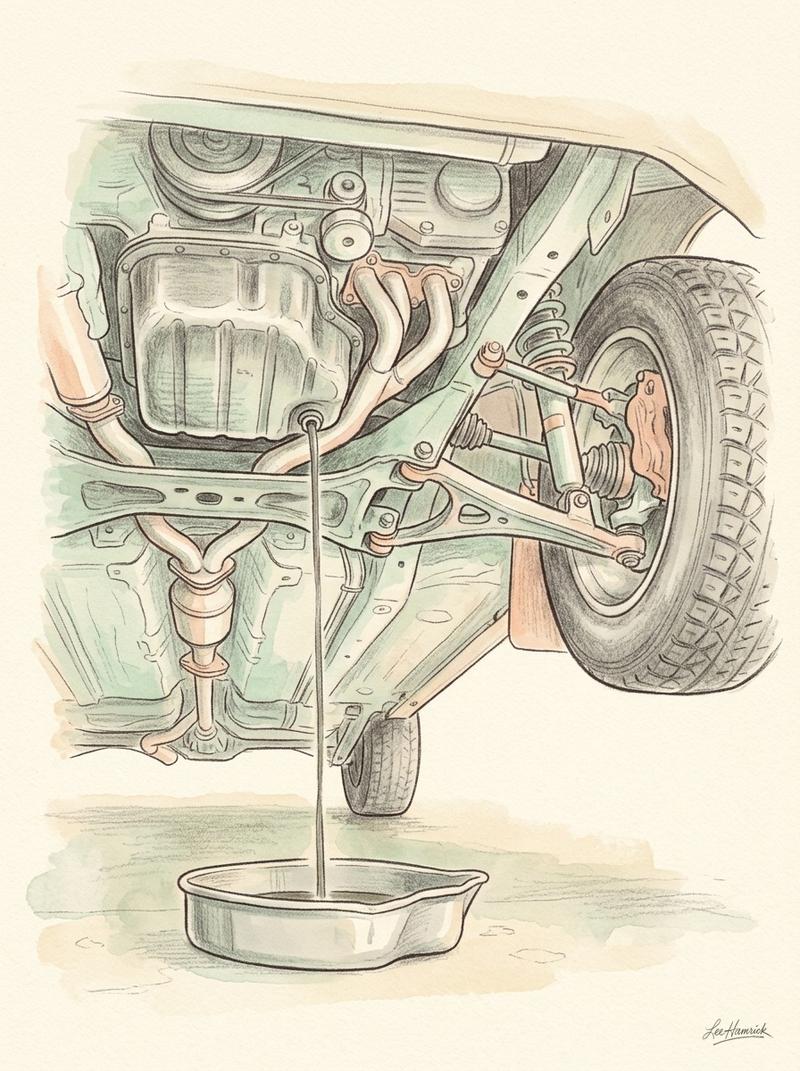
Track-focused cars reveal the most interesting data. A turbocharged sport compact running three track days a month generates wear profiles that can expose inadequate cooling, marginal lubrication intervals, or bearing play that casual street driving would hide for years. Whether oil analysis has documented specific saves of this kind in fleet or enthusiast settings is harder to verify than the industry tends to suggest. The anecdotes circulate widely; the documented, attributable case histories are rarer. The mechanism is sound. The specific outcomes depend on what you do with the data.
The Practical Reality
Blackstone's reputation is genuine, but the utility depends entirely on what you're trying to prevent. If your question is "is my 2019 Honda Civic running fine," oil analysis answers a question you didn't need to ask. If your question is "will this 20-year-old engine survive another season of autocross," or "how much longer can I stretch intervals on this diesel," the data becomes concrete and economically justified.
Sampling procedure matters more than most people expect. The sample has to come from the drain plug or a mid-pan location, not the filler hole. It should represent the engine warm (not hot, not cold), and it should be drawn before the oil change so you're capturing the full interval's accumulation. Most owners get this right. Some don't, and a contaminated sample defeats the whole purpose.
Blackstone's standard analysis costs $40 and the sample kit is free. The diagnostic feedback in the written report is concise and specific. They don't hedge or manufacture concern. If the data is clean, they say so. If something warrants attention, they explain which system to investigate first and what the wear pattern suggests about root cause. How results are delivered and whether trends can be tracked across samples over time isn't detailed on their public-facing pages, so it's worth calling them directly at (260) 744-2380 if that matters to your use case.
One thing worth noting: Blackstone has been doing this since 1985, which gives them a substantial comparison database. Their location is 416 E Pettit Ave, Fort Wayne, IN. Who founded the company and what their background in tribology or engine diagnostics was isn't something I've been able to confirm from available sources, and that history doesn't appear to be published on their site.
When It Doesn't Matter
For modern vehicles under warranty running OEM-recommended intervals with known service history, oil analysis occupies the same space as expensive synthetic oil in a vehicle that will be traded in at 60,000 miles. Not wrong, but capital that could accomplish more elsewhere.
For owner-maintained cars, especially those with deferred repairs or unclear history, a single oil analysis report can be the difference between a $300 bearing replacement decision and a far more expensive engine rebuild surprise three months later. That value proposition becomes even stronger if you're planning to keep the vehicle past the initial loan payoff or if depreciation is no longer your primary cost driver. For a sense of what that kind of uncertainty looks like in practice, see our piece on what a full restoration actually takes.
The data also only answers questions about the engine oil system itself. A turbo bearing starting to fail will show rising copper, lead, and tin in the oil, and only oil analysis sees it early. Your ear, your scan tool, and your instinct will miss it until you see a low-boost code, and by then the turbo is scored.
Most owners are better served by doing the thing they're already not doing: keeping records, honoring oil-change intervals, and driving the car in a way that keeps temperatures and pressures within design limits. But for the people running hard, pushing mileage, or facing uncertainty about engine condition, Blackstone Labs turns oil into intelligence. That's worth $40 and an afternoon. For more on what your mechanic already knows about preventive care, see A Primer in Basic Electrical Troubleshooting.