Honda S+ Shift: How the Prelude Simulates a Transmission That Doesn't Exist
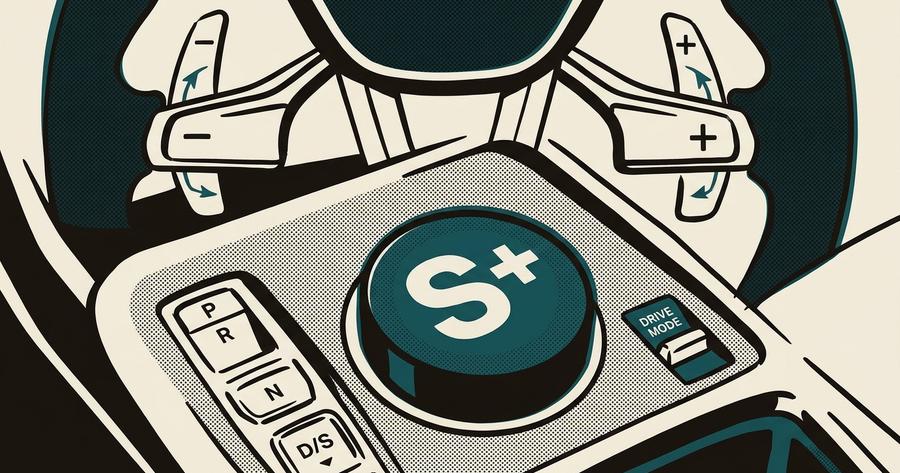
Honda's S+ Shift system in the 2026 Prelude fakes an eight-speed DCT using software, motor manipulation, and sound. Here's exactly how it works.
Look, I'm just going to say it: a fake transmission that makes you 0.8 seconds slower to 60 mph should have no business being interesting. And yet here we are.
The 2026 Honda Prelude doesn't have a traditional gearbox. What it has is a two-motor hybrid setup where an electric motor drives the front wheels the vast majority of the time, and the gas engine mostly functions as a generator feeding the battery pack. There's an electronically controlled clutch that lets the engine contribute directly at steady highway speeds, but that's about as exciting as it sounds. No gears. No shifts. No drama.
Honda decided that was unacceptable for a car wearing the Prelude name. So they built a simulated eight-speed dual-clutch transmission out of software and speaker wire. And according to Prelude powertrain project leader Yoshiharu Saito, this isn't just a party trick, it's a genuine attempt to solve something real.
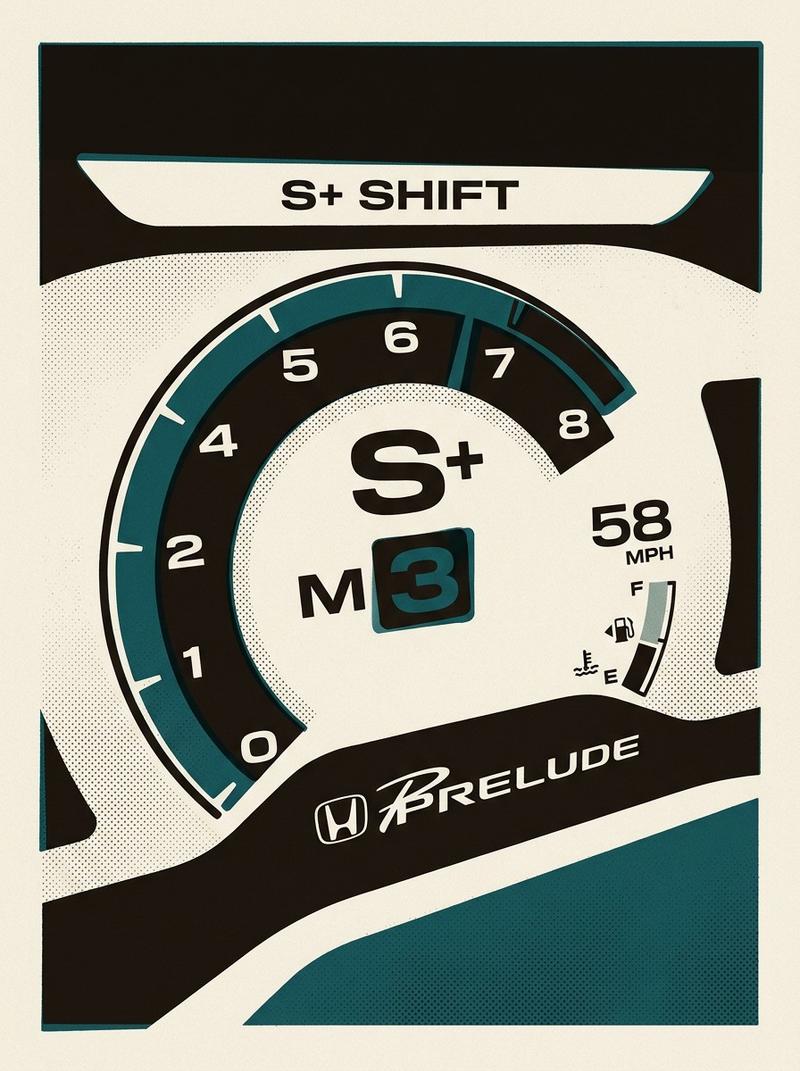
Before S+ Shift even became possible, Honda laid two pieces of groundwork. The first was Linear Shift Control, which was developed to solve a specific and genuinely annoying problem: in a hybrid where the gas engine runs at whatever RPM is most efficient for generation, the engine noise has nothing to do with how fast the car is accelerating. Your right foot goes down, the electric motor responds, but the engine is just buzzing away at its own pace doing generator stuff. Drivers hated the disconnect. Linear Shift Control makes the engine sound like it's actually revving through gears in response to throttle input, tying the audio experience to the physical one.
The second piece was Direct Acceleration, which fires up the engine early when the driver wants a quick launch, so the battery has plenty of juice on tap and the torque delivery feels immediate and natural rather than like a capacitor draining. Both of these, together, set the table for what S+ Shift actually does.
Push the S+ Shift button on the center console and the whole character of the powertrain changes. A rev counter appears on the display. The shift paddles on the steering wheel now mean something. Honda is targeting the feel of a 2.4-liter naturally aspirated four-cylinder, which makes sense given that the electric motor has a torque curve that doesn't exactly scream high-revving sports car without some creative management.
Here's the mechanical reality behind what you're feeling:
- Upshift simulation: Pull the paddle for an upshift and Honda briefly puts the electric motor into regeneration mode. This instantly reduces motor output and drops the gas engine's revs at the same time, recreating the interruption in acceleration you'd feel from an actual gear change. It's real deceleration happening through real drivetrain components. The curtain is there, but what's behind it isn't fake.
- Downshift simulation: Pull for a downshift and Honda does the opposite, artificially spiking the generator motor's load, which forces the combustion engine to rev up quickly and produce that satisfying blip you'd hear and feel from a proper DCT downshift. In some situations, Honda will also briefly reduce drive motor output during the downshift to give you the forward pitch you'd feel from a big rev drop through a real gearbox.
- Sound layer: Honda's Active Sound Control system reads real-time engine speed and throttle position, then emphasizes specific frequency components through the Prelude's eight cabin speakers. Saito says the downshift blip sound is specifically tuned to stand out. Getting ASC to integrate convincingly with the physical sensations was, according to Honda, one of the bigger engineering challenges of the whole project.
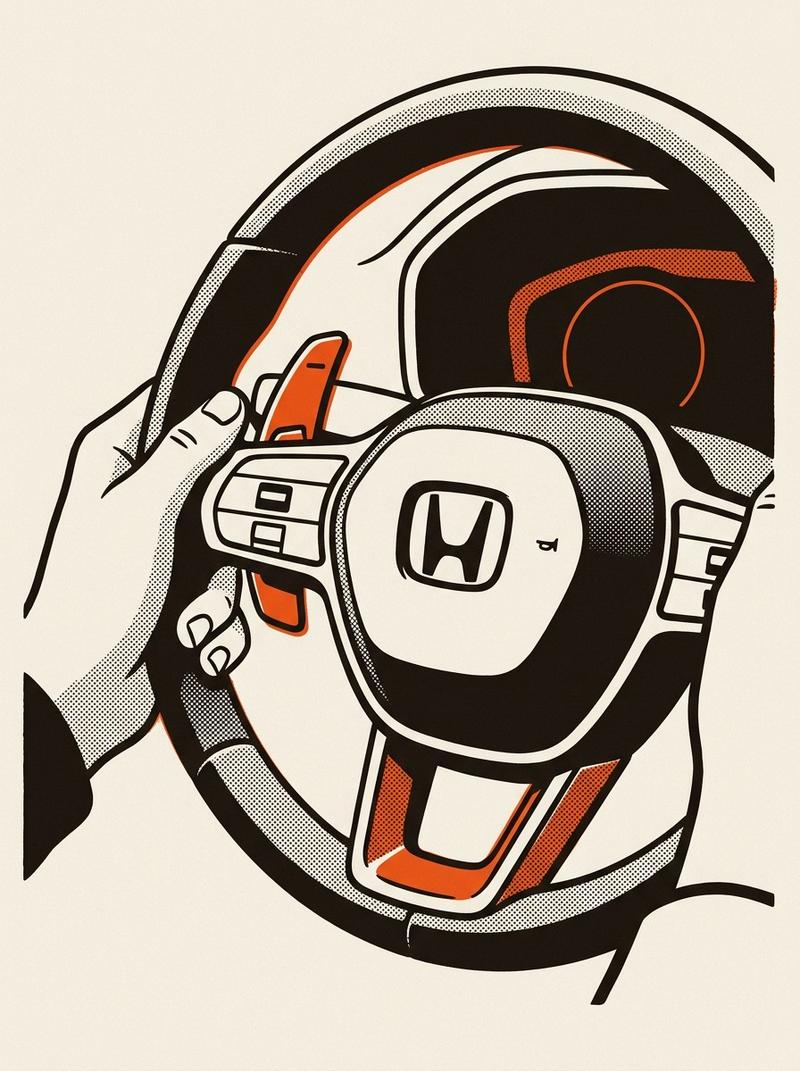
The 0.8-second hit to 60 mph when S+ is active is real and it's intentional. Every simulated upshift is an actual interruption in motor output. Honda is not lying to you about that. You are genuinely trading a fraction of outright acceleration for the texture of a shifting car. Whether that trade is worth it depends entirely on what you want from driving.
I don't care if this is controversial: I think that's a legitimate trade to offer. Not because simulated anything is inherently good, but because the underlying sensation is being generated by real hardware doing real things. The software isn't painting over a boring experience, it's choreographing actual physical events in the drivetrain to produce a specific feeling. That's closer to calibration than it is to fakery.
Saito put it this way: "The response and linearity to even slight accelerator input changes during acceleration and deceleration, such as on uphill roads or freeways, are capabilities not previously achieved in conventional hybrids, and we believe this allows drivers to enjoy a true dialogue with the vehicle."
That word, dialogue, is doing a lot of work. It's also the right word. What makes a manual or a good DCT engaging isn't just mechanical complexity, it's the feedback loop between driver input and vehicle response. S+ Shift is Honda's attempt to rebuild that loop inside a powertrain that doesn't have the hardware to create it naturally.
Will it feel as good as a real short-throw six-speed? Almost certainly not. But compare it to a standard hybrid drivetrain that just silently rockets forward with zero character and zero conversation, and the calculus gets more interesting fast.
The Dodge Fratzonic fake exhaust this is not. That system is noise for noise's sake, bolted onto a car pretending to be something it isn't. What Honda built for the Prelude is a complete system where the audio, the physical sensations, and the driver inputs are all wired together into something coherent. It's engineered, not theatrical.
The bigger picture here is that Honda just showed one possible answer to a question the whole industry is going to have to answer: how do you keep driving interesting when the hardware that made it interesting is going away? Software-defined driving dynamics, calibrated to produce real physical responses rather than just sounds, might be exactly where this goes. The 2026 Prelude is the first test case. It won't be the last.

Written by
Vince Russell