The Weirdest Car I've Ever Seen Come Through a Japanese Auction: The Toyota Origin
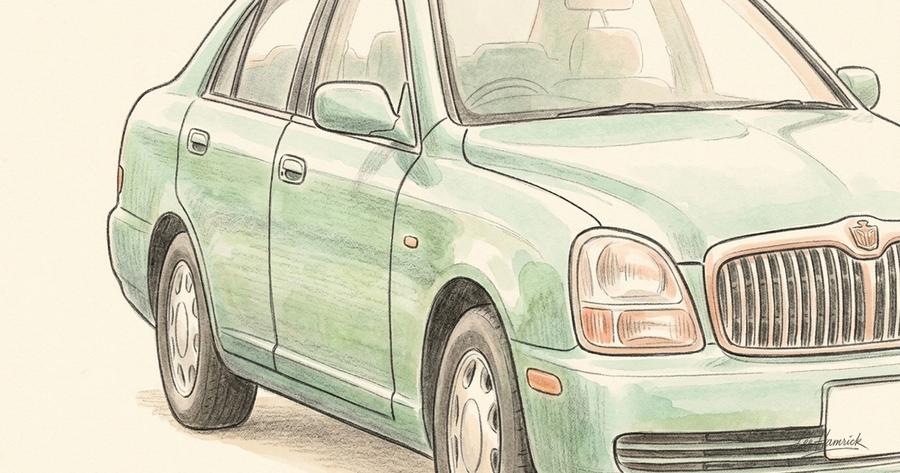
The Toyota Origin is a hand-finished, suicide-door 2JZ sedan almost no American has heard of. Here's what it takes to hunt one down from a Japanese auction.
There is a certain kind of car that doesn't need to justify itself to you. You either feel it the second you lay eyes on it, or you don't, and no amount of talking is going to move you from one camp to the other. The Toyota Origin is that car, and for the tiny handful of Americans who have ever seen one in person, the reaction is almost always the same: what is that?
The answer is both simple and deeply strange. Toyota built the Origin in 2000 and 2001 as a limited-production commemorative sedan, a deliberate callback to the 1955 Toyopet Crown, which was the company's first passenger car. The bodywork was finished by hand. It rides on a rear-wheel-drive platform. It opens with rear-hinged suicide doors. And under the hood sits the 2JZ inline-six, the same basic engine family that made the Supra a legend. Toyota built somewhere in the neighborhood of 1,000 of them, sold them exclusively in Japan, and never looked back. The Origin was never federalized, never marketed to the US, and barely mentioned in American automotive press. It is, by almost any measure, a ghost.
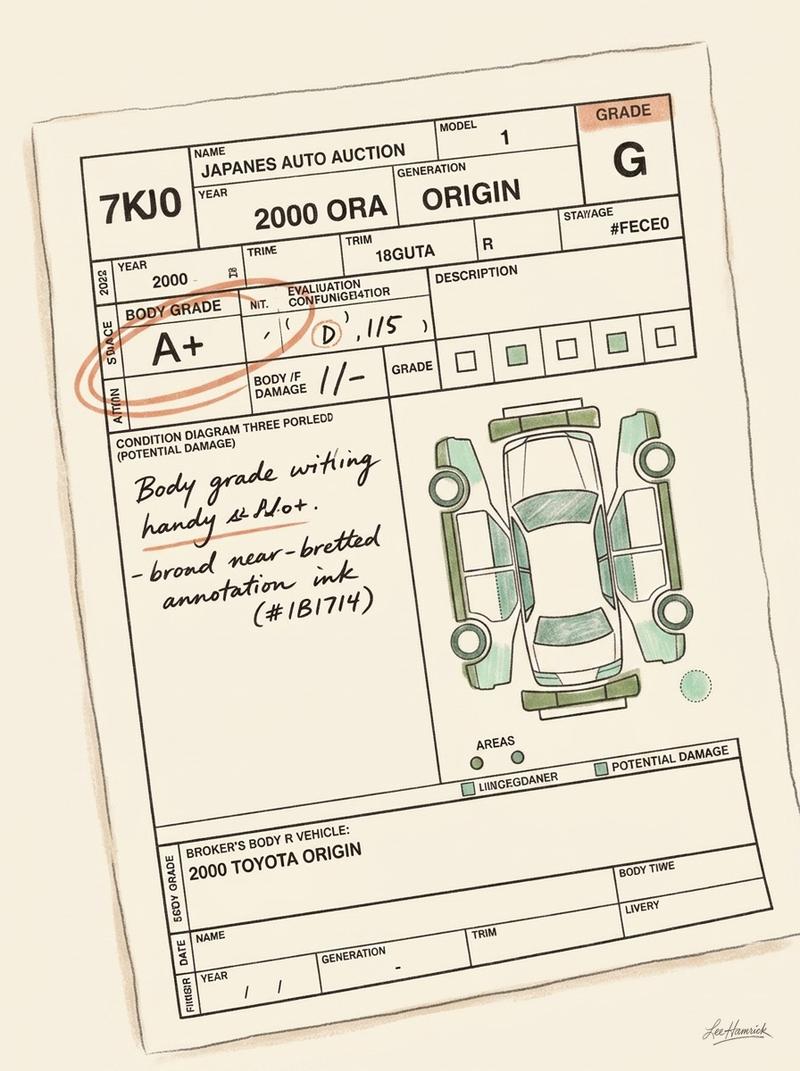
Spending more than $30,000 on a sight-unseen car from a Japanese auction is not something most people would call a rational decision. The people who do it anyway are a specific breed, and the process they navigate is genuinely difficult. Japanese auction houses like USS Tokyo operate under strict rules around photography and information sharing, which means you are often working off an auction sheet, a grade number, and whatever trust you've built with a broker who has actually walked the car. You are buying a feeling before you are buying a machine. That particular brand of commitment is something I understand completely, even if the courage required to wire five figures overseas for a car you've never sat in is something I deeply respect and have not personally tested.
What makes the Origin worth that kind of nerve is the sum of its parts, and more importantly, what those parts mean. Hand-finished bodywork in modern automotive production is essentially extinct. The fact that Toyota signed off on it for a commemorative run at all says something about what the company was trying to express: not performance, not innovation, but lineage. Reverence. The shape that references the 1955 Toyopet Crown isn't nostalgic in the soft, greeting-card sense. It's a direct argument that where you came from matters. The suicide doors aren't a gimmick here. They are part of the visual and ceremonial logic of the whole car, the way a period suit has the right lapels not because it's practical but because it's correct.
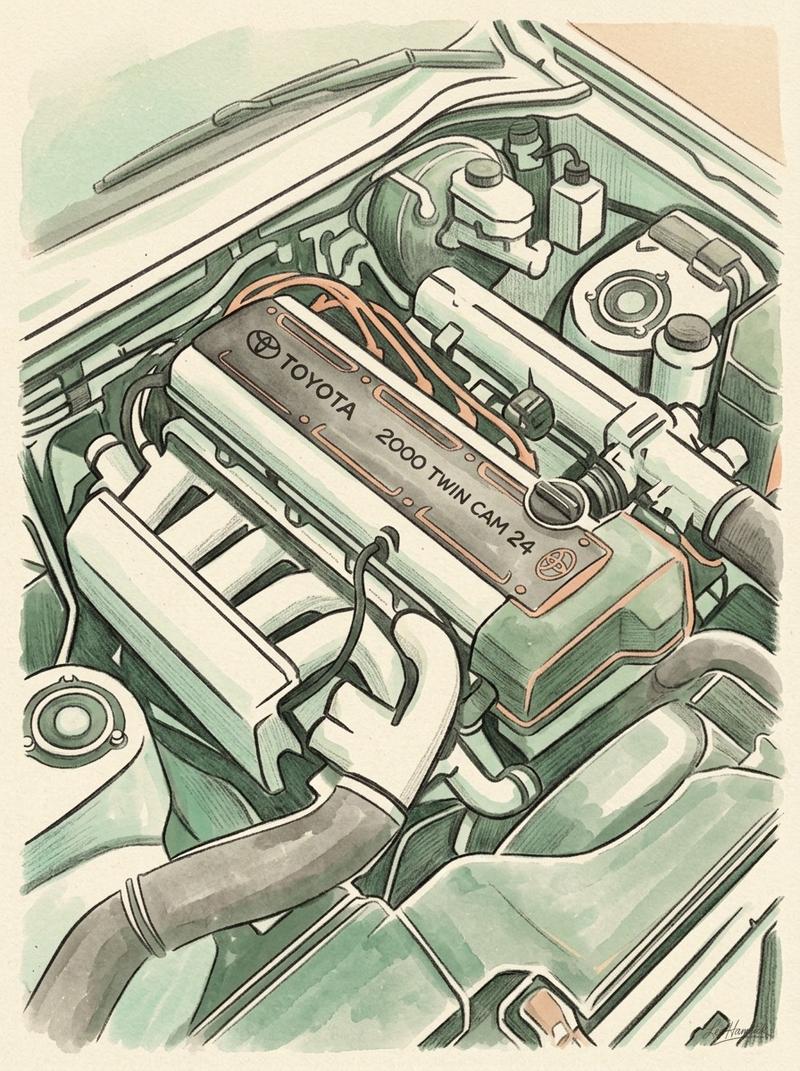
And then there is the 2JZ. It would be dishonest to pretend that engine doesn't do a lot of heavy lifting for the Origin's reputation in American enthusiast circles, because the truth is most of the people talking about this car online are talking about it because of that engine. Fair enough. The 2JZ earned everything it gets. But in the Origin, it isn't there to be tuned into four-digit horsepower numbers. It's there to be correct, to be appropriate, to be the mechanical soul the car deserves. A hand-finished commemorative sedan with a weak four-cylinder would be a costume. The 2JZ makes it honest.
The thing that gets me about a car like this, the thing that makes me actually care, is how completely it rejects the idea that a car needs to be for everyone. The Origin had no US dealers, no marketing campaign, no influencer preview event. It wasn't designed to move metal at scale. Toyota made it because it meant something to make it, kept it exclusive to the Japanese domestic market, and let the rest of the world find out about it slowly, the way you find out about good things, which is by accident, usually through someone who is too excited to stop talking. That is a more interesting origin story than most six-figure sports cars can claim.
Hunting a car like this through the Japanese auction system requires resources, patience, and the willingness to depend on someone else's expertise in a process you cannot fully verify from California. The auction grade system gives you a framework: inspectors score condition on a scale, note specific damage in a standardized diagram, and assign a letter for interior quality. A grade 4 or 4.5 car on a Japanese auction sheet generally means genuinely clean, but "generally" is doing a lot of work when you're committing real money from a continent away. Brokers who specialize in JDM imports earn their fee precisely because they know what the notation actually means versus what it says, and which auction lanes have inspectors worth trusting. It's a relationship business pretending to be a transaction business.
There's a version of car culture that looks at the Origin and sees an oddity, a curiosity, a punchline with a 2JZ swapped in for credibility. I don't have patience for that version. Loving cars is about individuality, and it should be an ego-less love. The person who spent over $30,000 on a sight-unseen JDM sedan that maybe a few hundred Americans have ever seen in person is not confused about what they want. They are precisely sure. That clarity is rarer than any engine specification.
The Origin exists in that specific category of automotive decision that doesn't require your agreement to be correct. It has hand-finished sheet metal, rear-wheel drive, factory suicide doors, a 2JZ, and a direct bloodline to the car that started Toyota's passenger car story. It was made in tiny numbers, kept in Japan, and is now slowly filtering into the hands of people who went looking for it on purpose. That's the whole story. And it's a good one.
Written by
Lyndsay Reynolds