Three Years, No Experience, One 1972 Toyota Corolla: What a Full Build Actually Costs You

A first-time builder spent three years completing a 1972 Toyota Corolla build. Here's what the process actually looks like and what it costs in time and money.
The average first-time restoration takes somewhere between two and five times longer than the builder originally planned. That stat doesn't surprise anyone who's been through it, but it's worth stating upfront, because the 1972 Toyota Corolla build documented across 17 episodes is exactly that kind of project: honest, slow, and ultimately finished by someone who started with no prior experience.
That last part matters. Not because it's inspirational, but because it changes the math on everything, from the mistakes made to the money spent to the skills acquired along the way. Here's what that kind of build actually looks like when you strip out the jump cuts.
Why a 1972 Corolla
The first-generation Corolla ran from 1966 through 1970, and the second generation followed from 1971 into the mid-1970s. The '72 sits right in the middle of that second generation, a car that was already earning Toyota its reputation for build quality that outlasted expectations. Small, light, and simple enough to be genuinely approachable, these coupes and sedans have become a quiet favorite in the classic Japanese car space, not because anyone hyped them up, but because the parts are still findable and the mechanicals aren't intimidating.
On the street right now, clean second-gen Corollas are selling anywhere from the mid-single digits to pushing $20,000 for a well-documented, sorted example. A project car with work needed can still be found under $5,000 if you're patient, which is exactly the entry point that makes this generation worth considering before prices follow the first-gen AE86 crowd upward.
What 17 Episodes of Build Documentation Actually Reveals
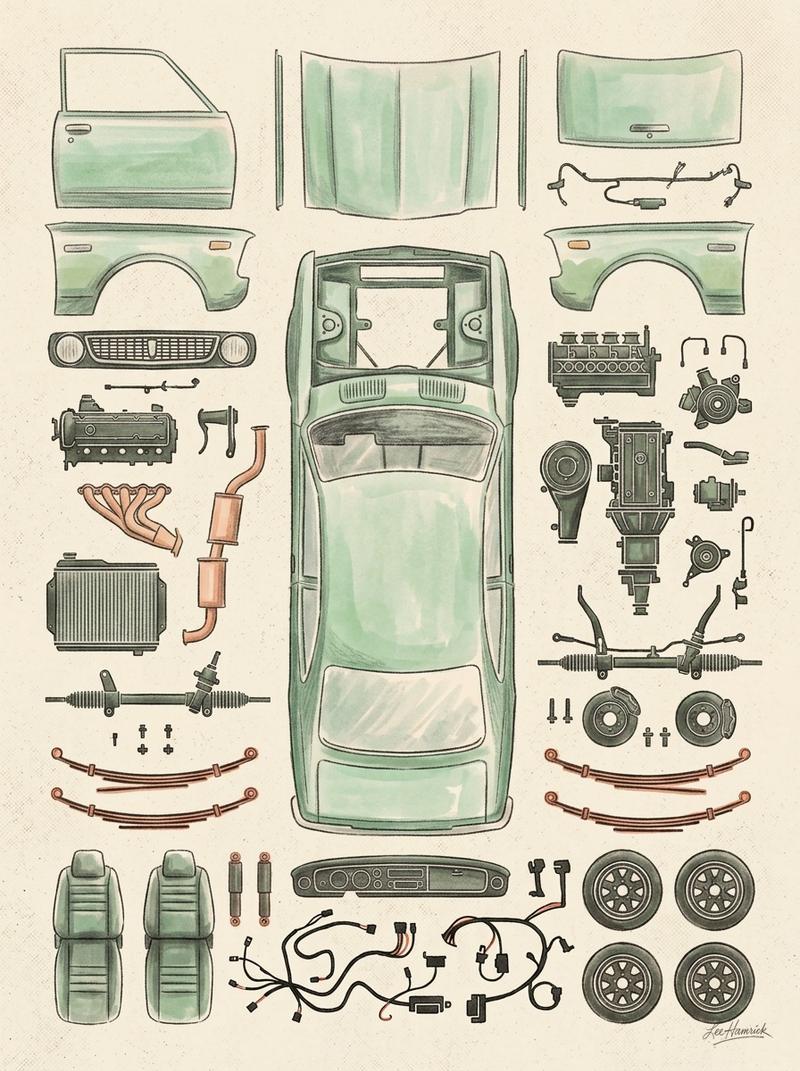
Documenting a build across 17 episodes, then compressing the entire thing into one uncut documentary, does something useful: it forces honesty. You can't edit out the parts where something didn't work. The full build format shows the real timeline, and real timelines on first-time projects almost always include the following:
- Work done twice because the first attempt had to come back apart
- Parts ordered wrong, ordered late, or ordered for the wrong application
- Weeks lost to life getting in the way
- A learning curve on every new system, whether it's bodywork, wiring, or suspension geometry
Three years for a first-time builder on a project of this scope isn't a failure. It's accurate. Anyone who tells you they completed a full restoration in a year either had professional help, a fully equipped shop, and unlimited time, or they're measuring differently than you are.
The Real Cost Breakdown Nobody Puts in the Video Title
Here's what nobody tells you about the real cost of a project like this: the purchase price of the car is usually the smallest line item by the time you're done.
Break it down by category for a typical vintage Japanese compact build:
- Acquisition: $3,000 to $6,000 for a driver-quality project, more if someone already sorted the rust
- Bodywork and paint: The single most expensive variable. DIY primer and spray can work costs a few hundred dollars and looks like it. A proper respray from a shop runs $3,000 on the low end and can easily cross $8,000 for detail work on a 50-year-old car with hidden rust
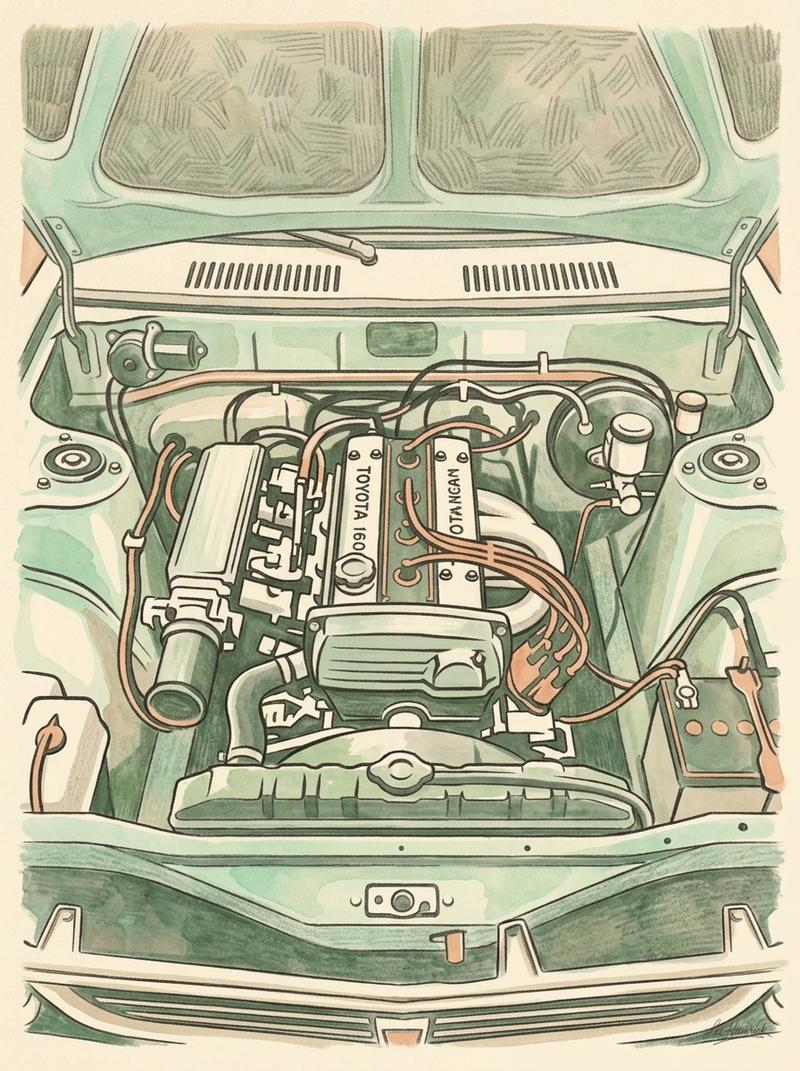
- Mechanical refresh: Brakes, seals, belts, cooling system, and a carburetor rebuild on a '72 Corolla can be done for under $1,500 if you do the labor yourself. Budget double that if any machine work is needed on the engine
- Suspension and handling upgrades: Even a mild refresh with new bushings, shocks, and alignment runs $500 to $1,200 depending on parts sourcing
- Tools: A first-time builder starting from scratch will spend $800 to $2,000 on tools over the course of a multi-year project, and that's being conservative
Add it up honestly and a completed, well-sorted 1972 Corolla build lands somewhere between $10,000 and $20,000 all-in, depending heavily on how much bodywork was needed and how much labor you did yourself. That's not a bargain for a car currently worth $12,000 to $18,000 in top condition. But you didn't just buy a car. You bought a skill set and a story, which is either worth it to you or it isn't.
Insurance and Registration: The Part Most Build Threads Skip
A 50-year-old Corolla qualifies as a historic vehicle in most US states, which changes the insurance picture significantly. Agreed-value classic car policies from carriers like Hagerty or Grundy are typically cheaper than standard auto insurance for a daily driver, and they actually protect the value you've built into the car rather than depreciating it on a standard schedule.
The catch is usage restrictions. Most agreed-value policies cap annual mileage, sometimes at 2,500 to 5,000 miles per year, and require that you have a separate daily driver on another policy. If you're building this car to drive regularly, factor that in. If it's a weekend and show car, the economics are genuinely favorable.
On the registration side, most states have a simplified process for vehicles over 25 years old, with reduced or flat-rate fees and emissions exemptions in many cases. California, where smog laws are strict, still exempts vehicles manufactured before 1976. A '72 Corolla clears that bar everywhere in the country.
What Three Years Without Experience Actually Buys You
The skills are real and they transfer. Someone who has disassembled and reassembled a vintage Japanese compact over three years has working knowledge of carburetion, drum and disc brake systems, vintage wiring, body panel fitting, and basic fabrication. That's not nothing. In fact, that's the foundation for every future project being faster and cheaper.
There's also a practical argument for starting on a car exactly like this one. Second-gen Corollas are mechanically uncomplicated, parts availability is solid through suppliers like RockAuto and specialty Japanese classic vendors, and the community around early Toyotas is helpful rather than gatekeeping. You're not working on something where a wrong move destroys an irreplaceable part.
Is This the Right Project Car Right Now
This is the deal right now: early Corollas are still priced on the accessible side of the classic Japanese market. First-gen cars have already crossed into collector territory. The second generation is close behind, and a finished, sorted example with documented work is going to be worth more in five years than it is today.
If you're looking at a project car purely as a financial instrument, the math is marginal at best. You will almost certainly spend more building it than you'd pay for an already-finished car. But if you're looking at it as a multi-year education with a usable, appreciating car at the end, a 1972 Corolla is one of the better platforms to start on.
The three-year timeline is honest. The no-experience starting point is actually an argument in favor of the build, not against it. You can learn on a platform without the stakes being impossibly high, and that combination of low barrier and rising value doesn't last forever in any segment. The window is still open on this one, but it's not wide open.

Written by
Zach Bronstein