Can You Make a Slow Car Fast for Free?

Stripping a first-gen Honda Fit of dead weight costs nothing but an afternoon. Here's what actually comes out and what it does to the numbers.
Pick the most forgettable car in your head. The kind of car that gets reviewed once and never again, because there is nothing interesting to say. A first-gen Honda Fit fits that description perfectly for this exercise: a 2008 model weighs around 2,500 pounds at the curb and makes 109 horsepower from its 1.5-liter four-cylinder. That works out to roughly 22.9 pounds per horsepower. It is not quick. It is not slow enough to be embarrassing, but it was never built to impress anyone at a track day. It was built to carry groceries and get good mileage, and it does both fine.
The question is whether you can meaningfully change its performance character without touching your wallet. Not upgrade it. Just strip it. Remove everything that contributes nothing to forward motion and see where the numbers land. This is the first question any serious track builder asks before touching the engine, and it is worth asking honestly about a car that starts this far behind.
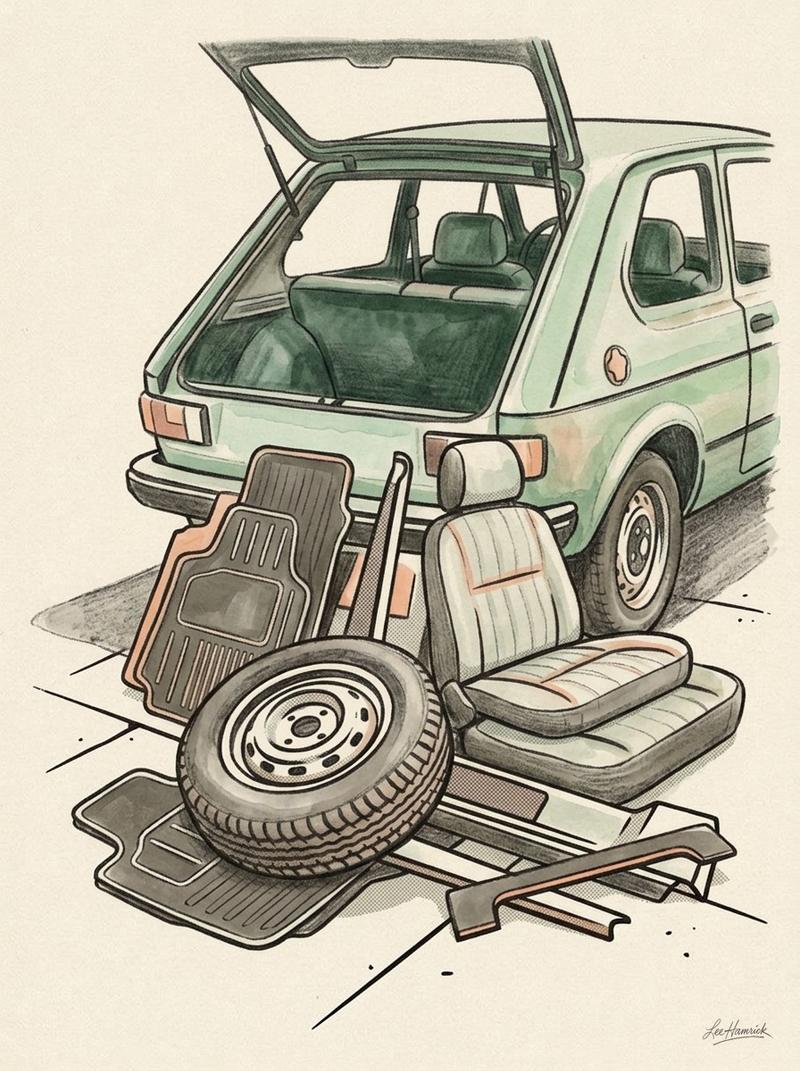
Here is what actually comes out of a first-gen Fit with zero dollars spent, and roughly what each item weighs:
The rear seat bottom and seatback together run around 30 pounds on this generation. The spare tire and jack assembly in the underfloor compartment is about 35 pounds combined. The cargo cover over the rear load floor is around 8 pounds. Front floor mats and rear floor mats together are roughly 10 pounds. The rear cargo mat is another 5 pounds. A full bottle of windshield washer fluid you drain down to the minimum is about 6 pounds. Whatever is actually living in the trunk and cabin, a gym bag, an umbrella, a reusable shopping bag collection, jumper cables you keep forgetting about, call that a conservative 20 pounds on a real-world car.
Add it up and you are looking at roughly 114 pounds removed, assuming you actually go through every compartment and do not leave anything behind. On a 2,500-pound car that is about 4.6 percent of the total weight. Now the car weighs approximately 2,386 pounds and makes the same 109 horsepower, so the power-to-weight ratio improves from 22.9 lb/hp to about 21.9 lb/hp. That is a real improvement, and it cost nothing. But it is also about one pound per horsepower, not a transformation. Be honest about that before you get excited.
What does one lb/hp actually buy you in the real world? In acceleration, the math is real but modest. Shaving roughly 4 to 5 percent of the car's mass should translate to something in the range of a 2 to 3 percent improvement in acceleration time, depending on the speed range and gear. On a car doing a 10-second 0-60, that is maybe two tenths. Noticeable if you are paying attention, invisible if you are not. Where it shows up more meaningfully is in braking and direction changes, because you are asking smaller components to manage less momentum. A car at 2,386 pounds carrying the same brake hardware as a car at 2,500 pounds will scrub speed slightly faster and recover confidence sooner. On a tight autocross course or a low-speed track event, that matters more than the straight-line number.
There is a handling quality that is harder to quantify but just as real. Less mass means less rotational inertia when you ask the car to change direction. The Fit already has a short wheelbase and responsive steering for what it is, and removing weight from the rear of the car shifts that dynamic in a useful direction. The rear gets lighter relative to the front, which can reduce understeer slightly on a front-drive platform. Not dramatically, but in a car already fighting the geometry of front-wheel drive at the limit, every bit helps.
A few things worth being clear about: aerodynamic drag and rolling resistance do not drop cleanly with weight, so those gains do not follow the same math. Aero losses are mostly a function of frontal area and speed, neither of which changes when you pull the spare. Rolling resistance does benefit slightly from reduced load on the tires, but on a slow car at track day speeds the effect is small. The real wins are in mechanical grip, braking, and direction changes, where mass reduction is directly proportional and shows up on a stopwatch.
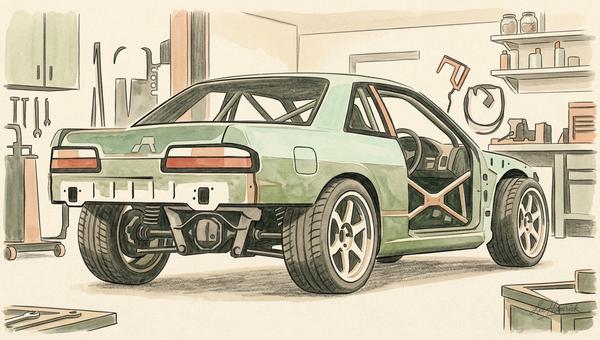
The other honest ceiling here is that you run out of easy targets fast. Once the seats are out, the spare is gone, the mats are stacked in the garage, and you have emptied every compartment, you are done. There is no more free weight left unless you start pulling door cards, dashboard trim, and sound deadening, and at that point you need tools, time, and a willingness to drive a car that sounds like a tin can. That crosses out of free territory in terms of commitment even if not in dollars. The 114-pound number above is probably close to the realistic ceiling for a typical road car stripped in an afternoon with no permanent changes.
What makes this exercise worth doing is not the specific numbers on a Fit. It is the framework. Any car you own carries weight it does not need. A larger car carries more of it. A full-size SUV with third-row seats that never fold down, a full-size spare, a cargo divider, floor mats in every row, and a trunk full of seasonal gear might have 150 to 200 pounds of removable dead weight without trying hard. On a 5,000-pound vehicle, that 3 to 4 percent is still real, even if the power-to-weight math starts from a much worse baseline.
The Fit is just the clearest version of the argument because it starts with so little power that every pound counts more. At 109 horsepower, there is no cushion. You are working with everything you have. Removing 114 pounds from a car with that little reserve is proportionally more meaningful than removing the same weight from a 400-horsepower sports car, where the surplus power absorbs inefficiency without complaint.
Can you make a slow car fast for free? Faster, yes. Four to five percent lighter with a proportional improvement in the ratios that govern acceleration and braking is genuinely real and it costs nothing but an afternoon and a willingness to sit in a car without floor mats. Fast is a different conversation, one that eventually involves money. But uncovering what the car already had by getting rid of what it never needed is how every serious build starts, because the free stuff always comes out first.
Written by
Nick Mangino