I Built a Junk Audi into a 400HP Sleeper with a $200 Chinese Turbo

One builder turned a beat-up Audi into a 400hp sleeper using a $200 Chinese turbo. Here's what actually happened, and what it means for budget builds.
There is a particular kind of confidence that comes from having nothing to lose. You buy a car that everybody else already wrote off, and suddenly the math changes completely. A $200 turbo on a $30,000 car feels like gambling. A $200 turbo on a $1,500 Audi feels like science.
That's the entry point for this build, and it's the only reason it makes sense. Someone picked up a junk Audi, the kind with a salvage title and a laundry list of problems that would scare off a reasonable person, and decided the only direction left was forward. Hard.
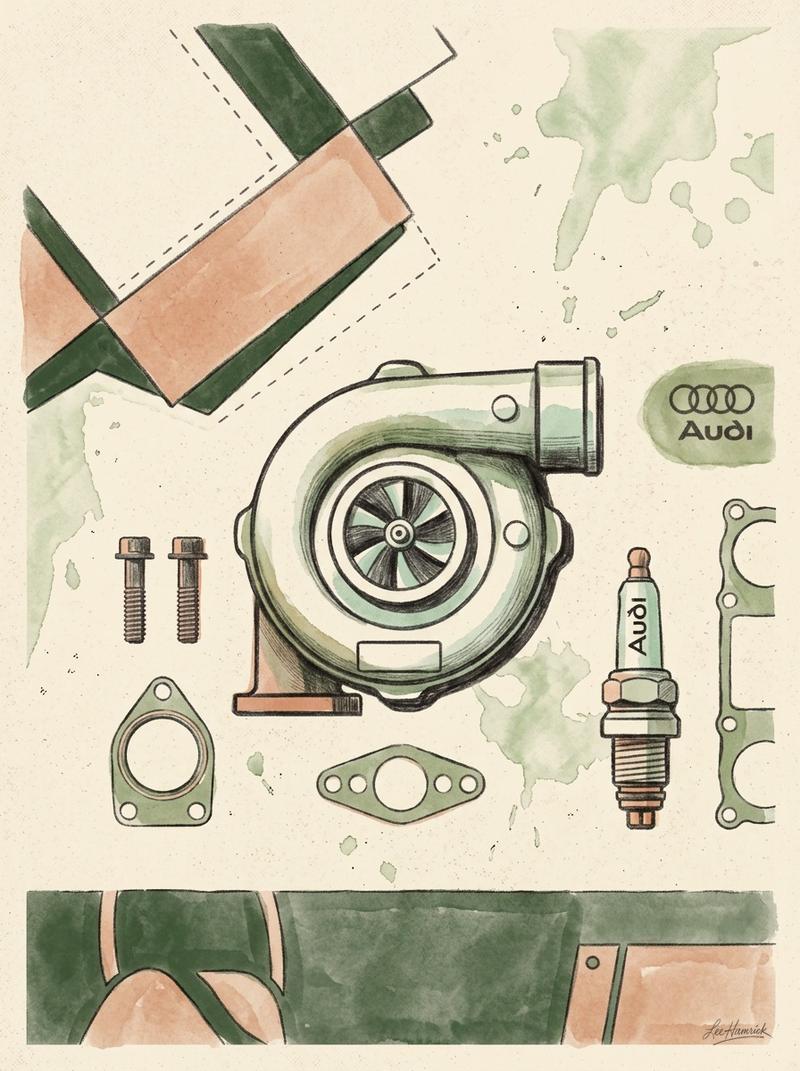
The turbo in question came from one of the Chinese manufacturers that have spent the last several years flooding the market with units that cost less than a decent dinner out. Skepticism is the correct default response. Cast housings, unknown metallurgy, tolerances you can only hope are close enough. But here's the thing that keeps getting ignored in those skepticism conversations: a cheap turbo on a low-compression engine running conservative boost targets is a fundamentally different risk profile than bolting one onto something you care about. The junk car changes the calculus entirely.
The build didn't chase 400 horsepower because 400 is a magic number. It got there because once you start pulling at the thread of a forced induction conversion, the supporting modifications have their own logic. Fueling has to keep up. The bottom end either holds or it doesn't, and on an Audi four-cylinder that hasn't been babied, you find out fast. Intercooling matters more than people admit when ambient temperatures in places like the Central Valley can cook intake charge before it even reaches the throttle body. Each piece forces the next piece.
What makes this particular build worth paying attention to isn't the horsepower number. It's the honesty about where the weak links are. The Chinese turbo didn't explode. It also isn't a known quantity over 50,000 miles of heat cycling and hard use, and anyone who tells you otherwise is selling something. The sleeper part works because the car looks exactly like what it started as: a forgettable, slightly rough Audi that nobody looks twice at in a parking lot.
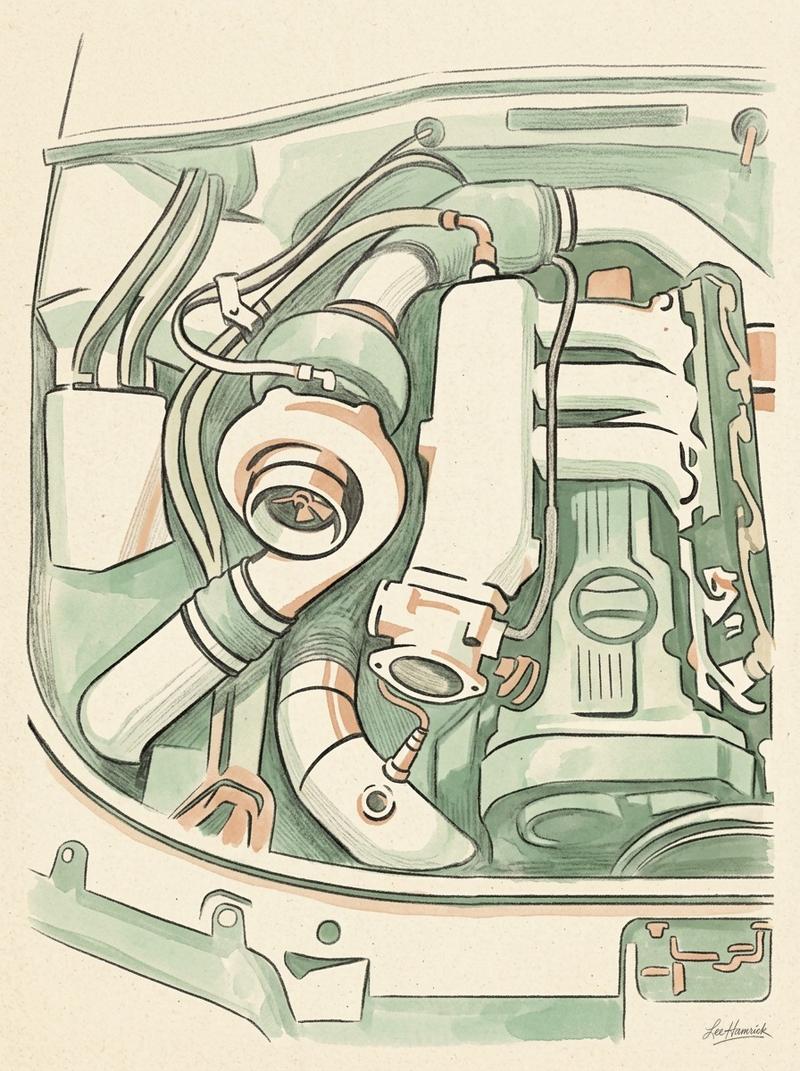
That's the underrated pleasure of the sleeper build, and I think it gets misread constantly. People assume the point is to embarrass other drivers, to set up some reveal moment where the Camry guy gets walked by something that shouldn't be able to do that. Maybe for some builders that's the motivation. But the more honest version is that a sleeper lets you exist outside the performance car hierarchy entirely. You're not asking for anyone's approval. The car doesn't advertise what it is, which means you never have to defend it at a car show or justify the turbo brand to someone with a louder opinion than yours.
Loving cars should be an ego-less thing, and nothing strips the ego out of it faster than a parts-bin build on a salvage title car with a turbo that arrived in a box covered in indecipherable warranty text. You either believe in the project or you don't. There's no clout involved.
The practical reality of a build like this is messier than the highlight reel suggests. Audi's parts ecosystem is not friendly to budget builds. Electrical gremlins that were present before the turbo conversion don't get better when you start adding boost and heat. Boost leaks happen. Fueling tuning on a limited budget usually means multiple dyno sessions or a lot of time with a wideband oxygen sensor and someone who knows how to read what it's telling them. Four hundred horsepower through a front-wheel-drive or quattro drivetrain that has already lived a hard life is a stress test the drivetrain didn't sign up for.
None of that is a reason not to do it. It's a reason to go in clear-eyed. The $200 turbo is not the expensive part of this build by the time you're done. The cheap turbo is almost a decoy. It draws attention because the number is provocative, but the actual cost of a forced induction conversion done properly, with supporting mods, proper tuning, and the inevitable parts that break during the process, is never the turbo itself.
What the $200 turbo represents is a philosophical position. It says that the barrier to entry for a serious power build doesn't have to be a parts catalog full of brand-name components and a budget that requires a payment plan. It says that patience, research, and a willingness to learn as you go can close a lot of gaps that money would otherwise fill. That position has limits, and the limits matter. But it isn't wrong.
The sleeper Audi sitting somewhere making four hundred horsepower with a Chinese turbo bolted to it is not a car I would have predicted I'd find interesting three years ago. I'm light on the technical details that would let me fully interrogate every choice made in that engine bay. What I can tell you is that the build has a clear internal logic, that the person who built it understood the risk they were accepting, and that the car does the thing it was built to do. That's a complete story. Drive what you love, and damn everyone else applies here as much as it applies anywhere.
The junk Audi doesn't need your permission to be fast. It already is.
Written by
Lyndsay Reynolds