Ten Thousand Dollars and a Barn Find BMW E30: What a Full Restoration Actually Takes

A $10,000 BMW E30 barn find goes from rust and mud to a custom yellow drift build. Here's what a real full restoration involves, step by step.
The E30 sat under decades of grime, surface rust creeping across the quarters, mud packed into every seam. Someone paid ten thousand dollars for it anyway. That's either optimism or experience, and in this case it turned out to be the latter.
What followed was a full ground-up restoration that ended with a custom yellow paint job and a car built specifically to drift. The transformation is worth examining not as a feel-good before-and-after story, but as a practical blueprint for what saving a classic actually costs you, in time, money, and decision-making.
Why the E30 Is Still Worth Saving
The BMW E30 ran from 1982 through 1994 in various forms, and it remains one of the most driver-focused chassis BMW ever produced. The car was light, balanced, and honest in a way that modern BMWs have largely abandoned in favor of mass and electronics. A well-sorted E30 on an autocross course communicates everything through the wheel and seat. You know exactly where the limit is before you cross it.
That's not nostalgia talking. It's geometry and weight. The E30's rear-wheel-drive layout and relatively simple suspension design make it a genuinely good platform for both learning and performance, which is why the drift community has kept demand alive for these cars even as rust has claimed hundreds of them. A clean example was already climbing in price years ago. A barn find at ten thousand dollars, with the right bones underneath the mess, is still a reasonable entry point if you know what you're getting into.
The key phrase is the right bones. Surface rust and grime are recoverable. Structural rust in the floor pans, subframe mounting points, or strut towers is a different calculation entirely.
The First Step Is Always Honest Assessment
Pressure washing is where most barn find builds actually begin, and not because it's dramatic on camera. You wash a car like this because you cannot evaluate what you have until you can see it. Mud hides metal condition. Grime fills seams that might be compromised. The pressure washer isn't restoration work; it's due diligence that should have happened before the check was written, but better late than never.
Once the surface is clean, the metalwork phase determines everything downstream. Rust repair on a unibody car is not optional or cosmetic. Welding in new metal on the quarters and rocker panels, if needed, is skilled work and time-consuming work. Done wrong, it fails at the worst moment. Done right, it gives you a structure worth painting.
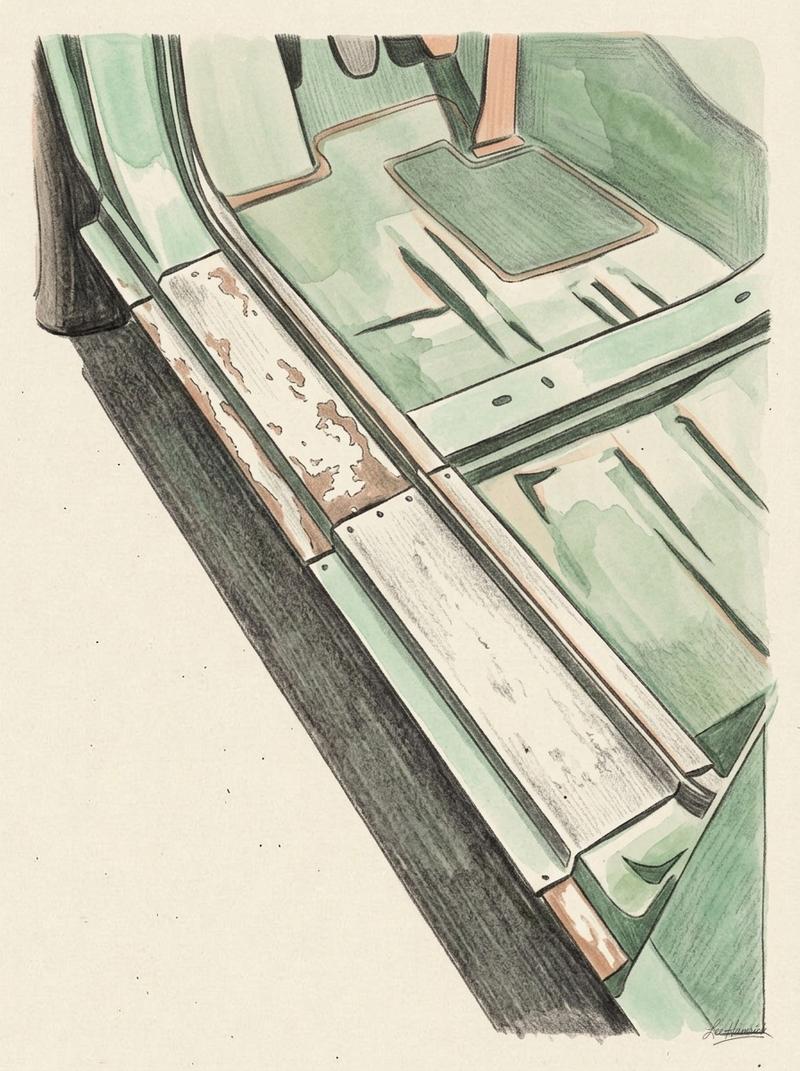
The honest accounting on metalwork is this: the labor almost always costs more than the parts. Sheet metal patches are cheap. Competent welding hours are not. If you're doing this yourself, the learning curve is real and the margin for error on structural panels is small. If you're paying a shop, budget generously and get a firm scope before they start cutting.
Custom Paint Is a Commitment, Not a Shortcut
Choosing a custom yellow for this build over a factory color is a deliberate statement. It signals that the car isn't being returned to original spec; it's being rebuilt as something intentional. That changes the restoration calculus. A concours-correct E30 has a specific audience and a specific value ceiling. A well-built custom drift car has a different one.
Neither is wrong. But they require different approaches to paint preparation. A custom color on bodywork with any remaining surface imperfections will broadcast every flaw. Primer work, blocking, and surface prep are where the final result actually gets decided, not at the spray gun. A professional-quality single-stage or base-clear paint job on a car this size typically runs several thousand dollars at a reputable shop, and that assumes the body is already straight and prepped. It can easily go higher depending on the shop and the color complexity.
Yellow, specifically, is an unforgiving color. It shows orange peel, runs, and thin coverage more readily than darker shades. If the finished car looks clean in yellow, the prep work was done correctly.
Interior Rebuilding: Where Patience Runs Out
A barn find interior is usually the worst part of the project in terms of raw hours and tedium. Carpet that has absorbed years of moisture, cracked dash plastics, seats that have seen better decades, and wiring that has been touched by previous owners with varying levels of competence. None of it is technically difficult. All of it is time-consuming.
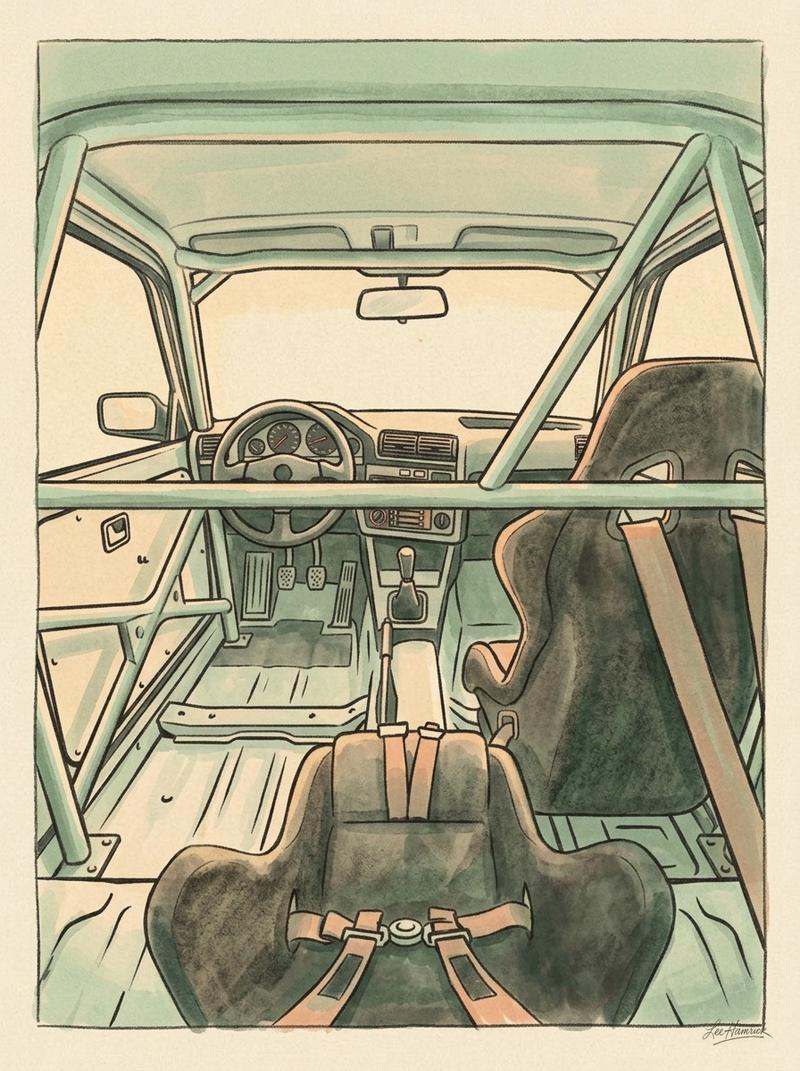
For a drift build specifically, the interior decisions are at least simplified. Full cage, harness bar, bucket seat, and fire suppression are functional requirements that also happen to replace most of the stock interior components. The question becomes how finished you want the non-functional surfaces to look. A bare-metal roll cage welded into a car with no headliner and no carpet is completely legitimate for track use. It's also a car you won't want to drive to the grocery store, which matters if you're in California and the car needs to be registered.
The restoration documented here appears to have gone the full route, rebuilding the interior properly rather than stripping it to a shell. That's more work and more money, but it produces a car that functions as a complete machine rather than a single-purpose track toy.
The Real Budget Behind a Ten Thousand Dollar Barn Find
Purchasing price is almost never the largest line item on a project like this. Ten thousand dollars gets you a car. The restoration is what costs you.
A rough breakdown for a build of this scope, assuming some DIY labor and a mix of shop work for specialized tasks, looks something like this. Metalwork and rust repair on a moderately affected E30 can run from a few hundred dollars in materials if you're welding yourself, to several thousand at a shop. Paint preparation and a custom single-stage job runs at minimum two thousand dollars at a competent shop, often more. Interior rebuild depends heavily on what you reuse versus replace; a full interior with new carpet, headliner, and reupholstered seats on an E30 can run well over a thousand dollars in materials alone. Suspension refresh, brake work, and mechanical sorting on a barn find are not optional, and a thorough go-through of the brakes, wheel bearings, rubber bushings, and cooling system will add another thousand to fifteen hundred dollars minimum. Drift-specific modifications, coilovers, angle kit if you go that direction, and safety equipment are on top of all of that.
A realistic total for a finished, driveable, good-looking E30 drift build starting from a ten-thousand-dollar barn find is somewhere between twenty-five thousand and forty thousand dollars depending on how much work you do yourself and how far you take the build. That's not a criticism of the project. It's what an honest budget looks like.
What the Finished Car Actually Represents
A restored E30 in custom yellow, properly sorted for drifting, is not an investment in the financial sense. The math doesn't work that way on modified classics. What it is, is a purpose-built machine that does exactly what it was designed to do, which is put a skilled driver sideways in a lightweight rear-wheel-drive chassis that rewards feel over horsepower.
That's a car worth building. The E30 earned its reputation honestly — and generations of BMW enthusiasts would agree — a build done right honors that rather than contradicting it. The barn find origin makes the story better, but the work is what makes the car.

Written by
Renee Russell