V8 Swapping an Oldsmobile F-85 on a Shoestring: What Used Parts Actually Cost You

A budget V8 swap into an Oldsmobile F-85 using junkyard parts is more doable than you think. Here's what it really takes in money, time, and fabrication.
The Oldsmobile F-85 is one of those cars that tends to get overlooked. It showed up at the beginning of the 1960s as GM's compact answer to the Ford Falcon, and for a long time it lived in the shadow of its flashier siblings. But the F-85 platform is light, simple, and built around a drivetrain architecture that makes it a surprisingly natural candidate for a V8 swap when the factory engine isn't up to the task. The question everybody asks is whether you can actually do it without spending real money, meaning sourcing a used engine from a salvage yard and making it work with what you can find, fabricate, or borrow.
The honest answer is yes, but the budget part depends almost entirely on how much of the work you can do yourself, and how realistic you are about what "cheap" means once you start tallying up the supporting parts around the engine itself.
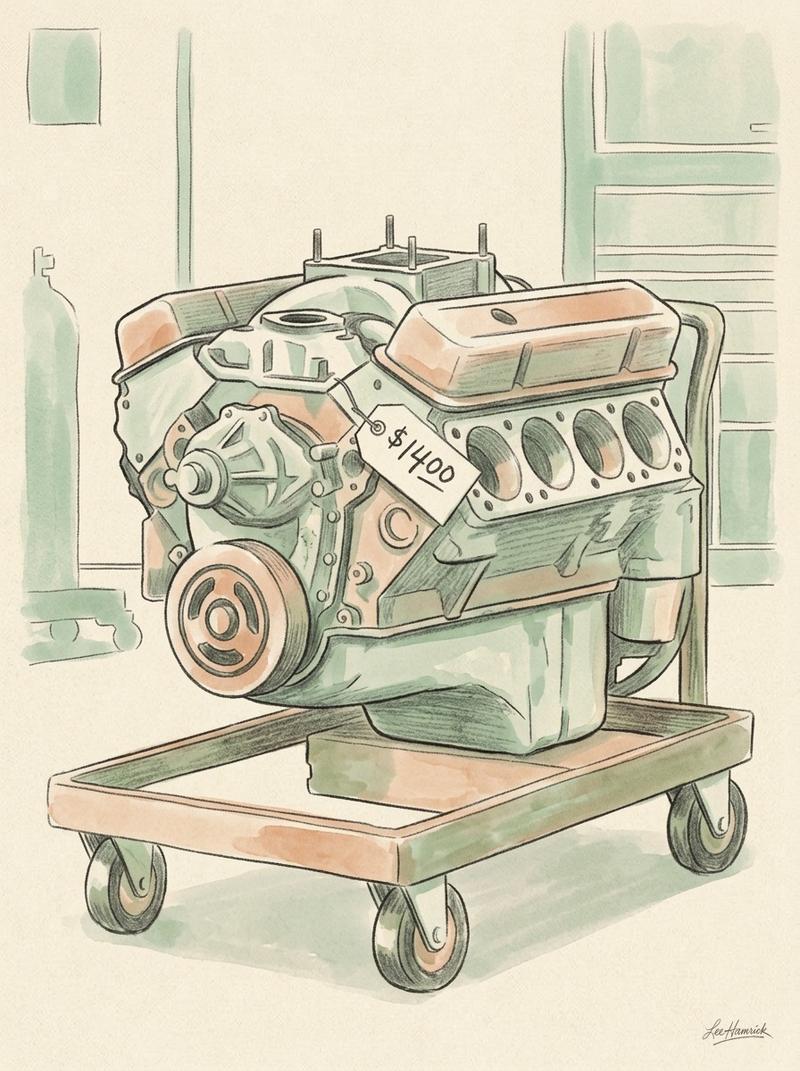
The core engine cost is where junkyard shopping pays off most clearly. A used small-block V8 pulled from a salvage yard, depending on condition and source, can run anywhere from a couple hundred dollars to around $500 for a long block in reasonable shape. That sounds like a steal until you remember that the engine is maybe a third of what a swap actually costs. You still need motor mounts or mount adapters, which for an F-85 swap usually means either sourcing period-correct parts from a donor car or having something fabricated. Fabrication at a shop costs money. Fabricating it yourself costs time and requires a welder, but it drops the dollar figure significantly.
The transmission is the next variable. If the donor V8 comes without a transmission, you need to find one that matches the engine and fits the tunnel, or you end up modifying the tunnel, which turns a weekend into a month. Sourcing a matching used transmission from the same yard as the engine is the right move, and some yards will sell them as a pair at a discount if you ask. Expect to spend somewhere in the $150 to $400 range for a used automatic or manual unit in usable condition, plus whatever a rebuild kit costs if the internals look tired.
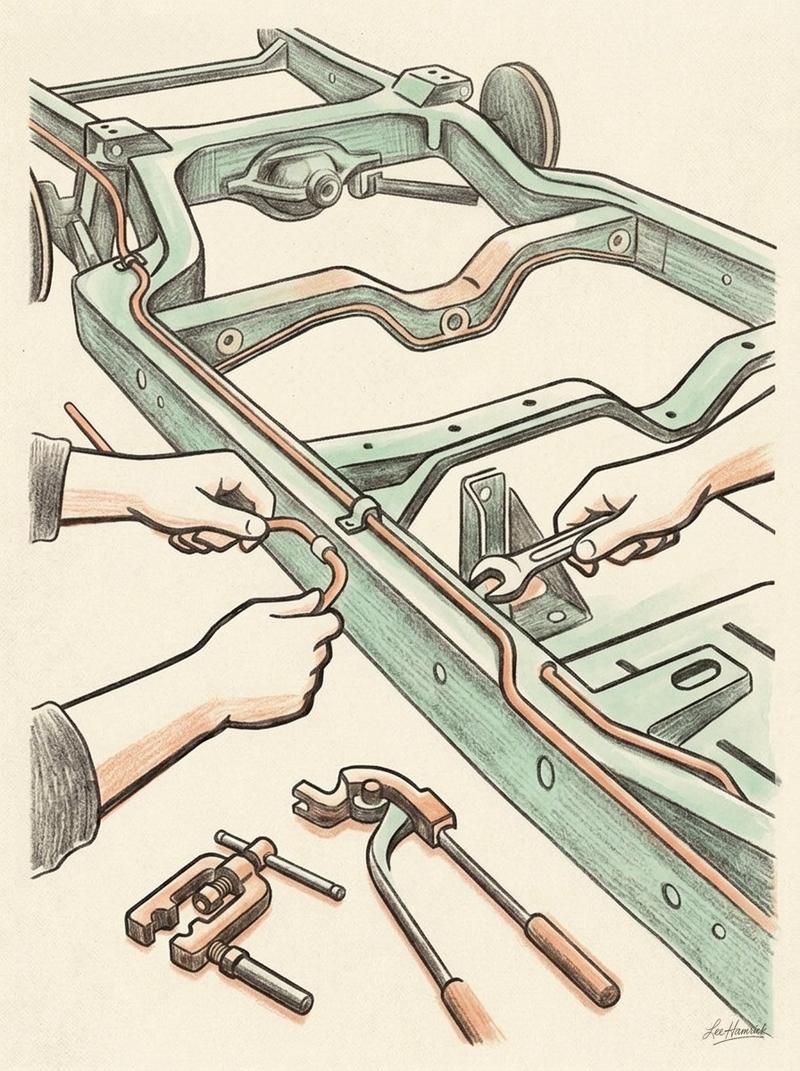
The brake system is where a lot of home builders underestimate both the work and the cost. Swapping in a V8 changes your weight distribution and your performance potential, and if you're upgrading one end of the car you should be thinking hard about the other. Custom brake line work on an older car like the F-85 often means bending and flaring your own lines, because pre-bent replacement sets don't exist for every configuration, and routing changes when the engine package is different. Copper brake line is forgiving to work with and easy to flare cleanly with the right tool, but you have to do it correctly. A bad flare in a brake line is not a "fix it later" situation.
The electrical side is similarly underestimated. An older GM V8 is not complicated, but it still needs a properly fused ignition feed, a working charging circuit, and functional sending units for oil pressure and temperature. If the donor harness is a mess of spliced wiring from a previous owner, budget time to sort it out or start fresh with a basic engine harness. This is one of those areas where spending $50 on clean wire and proper connectors saves you hours of chasing gremlins after the car is running. If you've never tackled automotive electrical work before, a primer on using a multimeter is worth reading before you start.
Cooling is another piece that catches people off guard. The F-85's factory radiator may not be adequate for a V8 depending on the application, especially if you're planning any meaningful driving. A used radiator from a V8-equipped donor in the same general family can often be made to fit with minimal modification, and that's a smarter move than buying new if budget is the primary constraint. Just pressure-test it before you install it.
Exhaust is almost always custom work on a swap build. Factory manifolds from the donor engine may or may not clear the F-85's steering and frame components depending on which V8 you're using, and finding headers already designed for this exact combination is unlikely. Budget for either custom bends from a local exhaust shop, or plan on doing the fabrication yourself if you have the tools. Even simple mandrel-bent pipe with basic flanges adds up once you're pricing it out per foot.
So what does the whole thing actually cost? A realistic budget for a junkyard V8 swap into a car like the F-85, assuming you're doing the labor yourself and sourcing aggressively from salvage yards, probably lands somewhere between $1,200 and $2,500 in parts depending on what the donor engine needs before it goes in, whether you have to buy any tooling, and how many supporting systems need attention. That number can go lower if you're lucky with the yard finds and the car's existing systems are solid. It goes higher fast if the engine needs machine work or the brake system is a mess. For a sense of how these costs compound in practice, the Cheap Race Car Build engine selection episode is worth a read, as is the follow-up on what happens once the engine and trans are actually in.
The time investment is harder to quantify but worth being honest about. A first-time engine swapper working weekends on an F-85 should expect this to be a multi-month project, not a two-weekend sprint. There will be fitment problems you didn't anticipate, parts that don't fit the way they're supposed to, and at least one trip back to the junkyard for something you thought you had covered. That's not a reason not to do it. It's just the reality of building something from scratch on a limited budget using parts that weren't designed to work together from the factory. If you want a deeper look at how junkyard sourcing actually works when you know what you're after, that's a useful reference even if the platform is different.
What makes the F-85 worth doing this to is that the end result is a genuinely lightweight, rear-wheel drive car with a V8 under the hood, built by your hands, for a fraction of what a comparable restomod would cost if you bought one. The platform is honest and simple, the swap is achievable without exotic tooling, and used parts sourced carefully make it financially accessible in a way that newer cars simply aren't. It's exactly the kind of project that rewards patience and mechanical curiosity more than it rewards a big checkbook.

Written by
Jay Corman