3D Printing

A Primer to 3D Printing Car Models

Jeremy Dorando · · Updated January 7, 2023 · 5 min read
A Primer to 3D Printing Car Models

Making custom car miniatures using 3D printing is a fun and rewarding…

A Primer to 3D Printing Car Models

There's something deeply satisfying about holding a perfectly scaled replica of your favorite car in your hands — one you designed and built yourself. 3D printing has made that achievable for hobbyists at almost any budget, but getting from blank screen to finished model requires understanding your materials, your tools, and the process. This guide covers everything you need to start 3D printing car models, from choosing the right filament to laying down that final coat of paint.

Choosing Your Filament: PLA vs ABS

Before you print a single layer, you need to decide what material to print with. For car models, two filaments dominate: PLA (polylactic acid) and ABS (acrylonitrile-butadiene-styrene).

PLA: The Beginner's Choice

PLA is a plant-based plastic derived from corn starch or sugarcane. Its lower melting temperature (around 180–220°C at the nozzle) means it's forgiving to work with and less prone to warping mid-print. It bonds well to most print beds without requiring an enclosure, and it produces crisp detail on small features like grille slats and door handles. If you're new to 3D printing, start here.

The tradeoff is durability. PLA is more brittle than ABS and can warp or soften in a hot car interior, so it's best suited to display models rather than anything handled roughly.

ABS: Stronger, But More Demanding

ABS is the same material used in LEGO bricks and many production car interior panels. It's tougher, more impact-resistant, and handles heat better than PLA. For a model you plan to paint heavily, sand aggressively, or display in a warm environment, ABS is the better material.

The catch is that ABS prints at higher temperatures (230–250°C) and is prone to warping as it cools, which means you'll generally need a heated bed and an enclosed printer to get reliable results. Beginners should expect some trial and error before achieving clean prints.

Equipment You'll Need

The 3D Printer

The printer is your most significant investment. Consumer-grade FDM (fused deposition modeling) printers now range from around $200 for entry-level machines to several thousand for professional-grade units. For car models, prioritize two things: resolution and build volume.

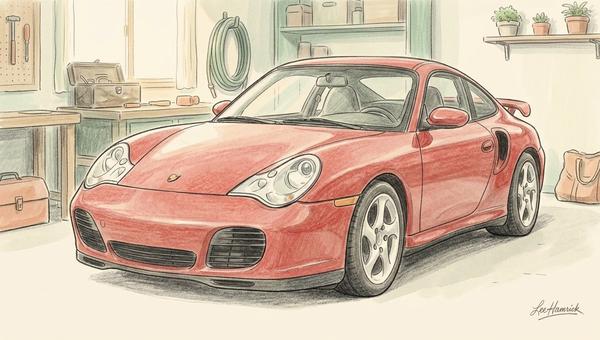
Car miniatures are detail-intensive. A printer capable of a 0.1mm layer height will reproduce curves and body lines far more faithfully than one limited to 0.3mm. Build volume matters because even a 1:43 scale model of something like a Porsche 911 can exceed the print bed of some budget machines, and anything in the 1:18 range will almost certainly need to be printed in sections.

Filament

Buy from reputable suppliers and store your filament in a dry environment. Moisture-absorbed filament produces brittle, bubbly prints that no amount of post-processing will save. Airtight containers with silica gel desiccant packs are a cheap fix.

3D Modeling Software

You'll need software to design or modify your model. Free options like Blender offer a full modeling suite but carry a steep learning curve. If you'd rather skip straight to printing, repositories like Thingiverse and Printables host thousands of pre-made car model files in the .STL format that printers read natively. Paid options such as AutoCAD or SolidWorks give you parametric precision if you want to engineer parts to exact scale.

The Printing Process, Step by Step

Step 1: Design or Source Your Model

Use your modeling software to design the car from scratch, or import an existing reference. Either way, pay close attention to small details: wheels, headlights, grille geometry, and mirror housings are what separate a convincing miniature from a generic blob. If you're modeling from a real car, use multiple reference photos and cross-check dimensions against published specs.

Step 2: Export as an .STL File

The .STL (stereolithography) file format is the universal standard for 3D printing. Once your model is complete, export it in this format. Most modeling programs handle this through a straightforward export dialog.

Step 3: Prepare Your Printer

Level the print bed carefully — an unlevel bed is the most common cause of first-layer failures. Load your chosen filament and bring the bed and nozzle up to the correct temperatures for your material before you begin.

Step 4: Slice and Print

Load the .STL file into your printer's slicing software (Cura and PrusaSlicer are both free and widely used). The slicer converts your model into layer-by-layer instructions the printer can follow. Set your layer height, print speed, and support structure preferences, then send the job to the printer. Depending on the model's size and complexity, expect anywhere from a few hours to over a day of print time.

Step 5: Remove, Clean, and Finish

Once the print completes, carefully remove the model from the bed and use a sharp blade to trim away any support material. Sand progressively through finer grits (start around 120, finish at 400 or higher) to smooth layer lines before painting. A coat of grey primer will reveal any remaining surface imperfections before your color coats go on.

Key Takeaways

  • PLA is easier to print and great for display models; ABS is tougher and more heat-resistant but requires a more capable printer setup.
  • Printer resolution (layer height) and build volume are the two specs that matter most for car model quality.
  • Free tools like Blender handle design; free slicers like Cura handle print preparation — you don't need to spend money on software to get started.
  • The .STL file format is the universal standard between your modeling software and your printer.
  • Sanding, priming, and painting after printing are what elevate a raw print into a display-quality model — don't skip post-processing.
Jeremy Dorando

Written by

Jeremy Dorando